
Nobu Hotel
The first Nobu hotel in the Midwest, Nobu Hotel Chicago, is a harmonious and intimate blend of creatively inspired Japanese minimalism and modern design, combining the essence of the Windy City with the spirit of a zen oasis.
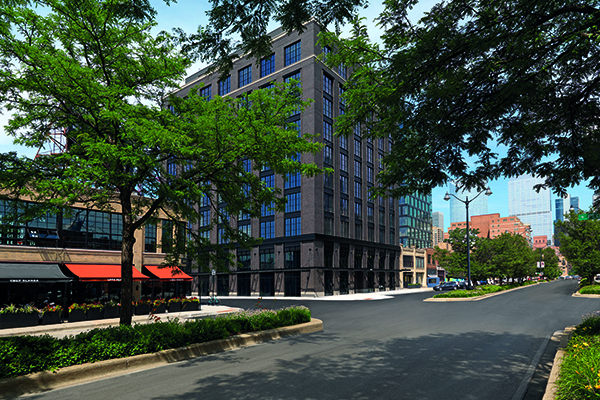
Owned by Nobu Hospitality, the 11-storey building overlooks ‘Restaurant Row’ in the heart of the West Loop, a short walk from the Loop business district.
Rooted in Chicago’s meatpacking history, the neighbourhood today is among the most desirable for dining, working and living.
Designed by Chicago’s Studio K in conjunction with Modif Architecture, the hotel embodies Japanese – inspired tranquility and the urban character of the West Loop in its striking use of proportion and natural materials.
Lead general contractors for the project to create Nobu Chicago were Shawmut Construction.
The overall design of Nobu Chicago is inspired by the Japanese approach to design, but from Studio K’s contemporary viewpoint. Japanese influences are merged with the West Loop’s grit and topped with a layer of cosmopolitan sophistication. At its core, it’s a humble approach to design that creates stunning effects through an immense attention to detail.
Karen Herold of Studio K said: “It’s a strikingly simple and tranquil space—anything unnecessary has been left out to keep it free from clutter. Instead, a heavy application of textures and natural materials creates a warmth and intimacy rarely felt in large hotels.
“Inspired by the weathered beauty of Japan’s oldest buildings, natural materials in varying patinas are left intentionally imperfect as if they’ve been stopped in the middle of the ageing process. Finally, there’s a dramatic use of proportion throughout the space with unusually high ceilings offset by low furniture.”
Reserved, weathered, and intimate, Nobu Chicago brings a new understanding of luxury to Chicago’s West Loop.
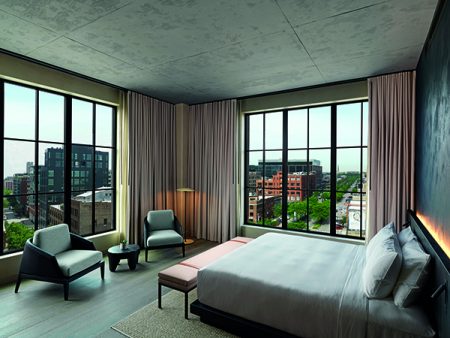
Sophisticated, warm and reserved, Studio K has also created rooms that are linear, high-end and intimate. Sisal and wool rugs, mango wood millwork and indigo accents incorporate textured, natural materials with Japanese roots.
Built-in millwork, a feature typically reserved for residential designs, feels high-end and permanent amidst Chicago’s bustling energy. At its core, the humble approach to design emphasises the luxury of experience through attention to detail.
Karen Herold continued: “We wanted to create a theme based on Japanese design principles, but viewed through the eyes of a westerner. The area where the hotel is located mainly comprises of older industrial-style brick buildings formerly used for meat packing – so we also wanted to make sure that the hotel interiors complimented this ambience.”
“We like to describe the look we have created as ‘industrial zen’ whilst it is very calm, it is not pristine, and uses a lot of multi-layered heavy textures which are simple in shape. This creates a tranquil yet robust atmosphere.”
The design principles on which the overall concept is based include: Datsuzoku – freedom from habit, escape from daily routine, transcending the conventional; Fukinsei – asymmetry or irregularity, and Yūgen – “an awareness of the universe that triggers emotional responses too deep and mysterious for words.”
Additional influences include Shizen – absence of pretence or naturality and Seijaku – tranquillity or an energised calm, stillness, solitude.
Artwork throughout the hotel is inspired by kintsugi (a traditional Japanese process that uses gold to glue broken porcelain). For example, the hotel lobby features a 26 ft tall brass sculpture, visually ‘gluing’ the deep indigo plastered walls together.
The brass sculpture itself embodies the traditional Japanese concept of wabi sabi – finding the beauty that is imperfect.
The hotel includes 115 guest rooms and suites, the signature Nobu restaurant and bar with mezzanine and 26ft high ceiling on the ground level that offers premier patio seating.
The plastered restaurant walls are decorated in a sand colour on three sides, complimented by beautiful mid grey oak flooring.
The rear of the restaurant features a black slatted wall which conceals a private mezzanine level dining room. The entire ceiling of the space features a huge clear resin sculpture in which leaves in varying shades of gold are embedded, representing the changing colours of leaves in the fall (a very major season celebrated in Japan).
The bar and lounge are situated at the west end of the restaurant, with the main dining area to the south east, and a sushi bar to the north east featuring seating overlooking a 30ft long viewing window into the kitchen.
Screens within the hotel’s entrance vestibule and the doors leading to the private dining area of the restaurant were inspired by Kumiko – a delicate and sophisticated technique of assembling wooden pieces without the use of nails. Thinly slit wooden pieces are grooved, punched and mortised, and then fitted individually using a plane, saw, chisel and other tools to make fine adjustments.
The Rooftop at Nobu is another stunning eatery showcasing dining amidst unrivalled panoramic views of the city from the 11th floor of the building. The restaurant includes sliding windows, blurring the division between the inside and the outside roof deck. A lounge area gives almost 360 degree views of the entire city.
Other facilities include a spa and indoor serenity swimming pool and 3,398 sq ft of flexible event space for private social functions and corporate meetings.
Karen Herold commented: “The spa and pool on the lower ground level feature sand coloured walls with a spectacular pink resin sculpture along the back wall giving the appearance of thousands of cherry blossom flowers falling from the ceiling. This has been placed to create a beautiful reflection in the pool.”
On the 10th floor, ballrooms offer stunning views of the Chicago skyline and can host up to 150 guests. The hotel’s flexible ballroom spaces are stylish and tech savvy, making them ideal for large conferences and receptions.
Floor-to-ceiling windows in all 115 guest rooms and suites offer city views. All rooms have a Dyson Supersonic bed, private bar, high-speed Wi-Fi and smart TV, and suites offer teak soaking tubs and walk-in showers. The bedrooms have sand coloured plastered walls, with indigo coloured water-resistant plastered walls in the bathrooms.
All of the hotel’s corridors are lit at floor level by beautiful lanterns, creating a stunning effect.
Trevor Horwell, CEO of Nobu Hospitality commented, “We are so pleased to introduce our first Nobu Hotel in the Midwest. Chicago is a world-class mecca of dining and entertainment and we are very proud to provide a new and exciting destination for the local community and visitors. This exciting project is a result of our long-standing affiliation with RCD Resorts, with whom we have partnered on our Miami and Los Cabos properties and share the passion for the Nobu brand.”
Nobu Hotels blend modern cool luxury and minimal Japanese tradition into the concept of a lifestyle hotel. Nobu hotels, restaurants and residences interact together to provide Nobu products and services that share the common characteristics of unique Nobu food experiences. Each provides a local experience with a modern design and stunning spaces.
Originating from world-renowned Chef Nobu Matsuhisa, Robert De Niro and Meir Teper, the Nobu Hotel concept is a curated individual experience where every property is different.
Recently named one of luxury’s 25 Most Innovative Brands by Robb Report, Nobu Hospitality is ranked among an elite selection of global luxury hospitality brands. The natural growth of the Nobu luxury brand built on service, image and hospitality, offers the complete spectrum of hotel and restaurant management for unique projects around the world.
With operations spanning five continents, the Nobu brand thrives in the world’s capitals as the destination lifestyle experience. The first Nobu Hotel opened in 2013 as a boutique hotel within Caesars Palace Las Vegas and was subsequently named one of the Hottest New Hotels of 2013 by CNN Travel.
This was followed by the opening of the Nobu Hotel Riyadh and the Nobu Hotel City of Dreams Manila. Nobu is strategically focused on further expanding its global portfolio of hotels through a solid development portfolio.
Vasacrafts Company Inc
Vasacrafts Company Inc., specializes in custom furniture and interior products, as well as architectural mill works. For Nobu Hotel, they collaborated with Studio K Creative to successfully develop and produce custom accessories. This was a great opportunity for the company to work with local materials sourced in the Philippines and offer a product that is truly unique for the project.
Josefin Hey, Marketing Manager at Vasacrafts said: “Working with the talented professionals behind Studio K Creative has been a seamless process and we look forward in continuously realising their brilliant designs for future projects.”
Vasacrafts prides themselves in collaboration with their clients to manufacture exclusive items that will truly elevate any project, while promoting Filipino craftsmanship and Swedish quality. The company was founded in 2017 and has evolved from solely producing European furniture classics to being a single source manufacturing partner with their comprehensive in-house R&D team.
Merida Off the Loom
Merida is an American textile design house renowned for naturally durable rugs woven from rapidly replenishable materials. Combining heritage looms with expert hand finishing, everything is made to order at Merida’s workshop in historic Fall River, Massachusetts, a once thriving hub of textile manufacturing. Under the artistic direction of Sylvie Johnson, Merida is revitalizing American craftsmanship with master-level design, innovating yarns and weaving techniques to create rugs of beauty and originality.
Merida works closely with interior designers and offers almost limitless possibilities to customize, from colours to yarns to tailored installations and stairs.
Building on a 40-year commitment to natural materials and sustainable manufacturing, Merida also advocates for fair labour practices that not only provide jobs but also promote health and well-being. They partner GoodWeave, an organization that works with rug producers to certify that no child labour is used in rug production. A percentage of sales supports the education of children in rug-making villages in India, Nepal and Afghanistan.
To find out more, www.meridastudio.com.