Dishoom Birmingham
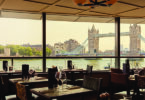
The doors to Dishoom Birmingham are open. Located at One Chamberlain Square (part of Paradise Birmingham), the restaurant overlooks the charming Grade I listed Birmingham Town Hall, the Birmingham Museum and Art Gallery, and the Chamberlain Monument fountain.
The café is now open daily, providing patrons with everything from breakfast and mid-morning chai, to lunch and afternoon tipples, right through to evening feasts and late-night snacks, served in the café, Permit Room bar, and on the large adjoining terrace overlooking some of the city’s most beautiful historic landmarks.
Each Dishoom is a love letter to Bombay – a way of sharing the team’s love of the city’s culture, heritage and people. Every Dishoom restaurant has its own unique story – a sort of founding myth – which begins with imagining the space as an Irani café deeply rooted in some specific aspect of Bombay history. This story gives context and coherence to the connections between Bombay and the new neighbourhood in which the café will take shape, and informs all aspect of the café’s design narrative.
Inspired by Birmingham’s history as the “city of a thousand trades”, the Dishoom Birmingham story explores the unique parallels with the markets of Bombay and the importance of the city’s commercial past. During the Indian independence movement these places of trade and commerce became places of quiet protest. Through the championing of local trades, they helped a new national identity take shape.
To bring this story to life, the Dishoom team – including long-term design partners, Macaulay Sinclair – visited Bombay to explore the remaining Irani cafés and general stores, countless antique shops, old bakeries, and some of Bombay’s oldest marketplaces, such as the Swadeshi Market. Endless wanderings about these spaces were then translated into detailed and thoughtful design within Dishoom Birmingham.
Their research took them to the Colaba and Fort districts where they visited one-hundred-year-old shops, still selling their original wares. These retail spaces, having been looked after and cherished by generations of family members, were full of character and rich with texture. Offering a delicious juxtaposition to the old markets, they also visited private homes in the city, such as those once belonging to David Sassoon (a leading trader of cotton and opium in China in the early 1900s) and legendary 19th century stock-broker Premchand Roychand.
The team then brought together the aged patina of the many charming retail spaces with elements of grand architecture, adding a touch of polished elegance and refinement to Dishoom’s market-feel Irani café.
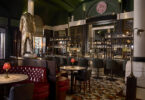
Peppered throughout the restaurant are the familiar Irani café touches. Upon arrival, guests are greeted by an owner’s desk, just as you would be at an Irani café, made from a glazed timber unit that was bought in Bombay and lovingly restored. ‘All are welcome, all day’ is back-painted on glass panels behind the desk – inspired by old Indian advertisements the team found in Regal Café and Café de la Paix – two charming Irani cafés. There are more throughout the restaurant advertising ‘Hot Chai’, ‘Veg. Samosas’ and ‘All kinds of sharbats.’ The café’s bespoke clock is inspired by that found in Café Military.
Adding to the market-feel, high-level shelves lined with household goods and stacked boxes (inspired by the amply stocked shelves found in Regal Café), evoke Bombay’s busy market stalls and overflowing shops.
Guests of Dishoom Birmingham might note the timeless boxes of K. N. Ajani, well-known manufacturers of nutcrackers, knives, scissors and locks, stored in two glazed double-sided cabinets which were shipped from Bombay. The grandfather who started the business was so inspired by the Swadeshi movement that he relocated his shop from Masjid Bunder to the Swadeshi Market.
The team are also immeasurably pleased to display items from some of their most-loved Irani cafés and bakeries, including Kyani & Co., which opened in 1904, and American Express Bakery, so nicknamed due to its speedy delivery of its goods to American cruise ships. Not only were the team gifted ‘new’ packaging from suppliers, but they also painstakingly recreated old packaging that was found on the shelves at Café de la Paix. There’s an old Colgate tooth powder box, along with face powder and Chandrika soap.
Layered on top of these design features, the team also sourced over 70 pieces of period antique furniture from Bombay.
Executive Chef Naved Nasir’s menu of Bombay comfort food is served from breakfast-time until late. Dishes cooked in Hindu, Muslim, Irani and Parsi traditions all jostle for space on the table. From Bombay breakfasts to street food staples, hearty dishes of biryani to the curries of Mohammed Ali Road, and the famous grills of Colaba, the Dishoom menu brings together the food of all Bombay.
For every meal served at Dishoom Birmingham, the team donate a meal to one of their long-term charity partners, Magic Breakfast and Akshaya Patra, two excellent charities that provide free, nutritious meals to children in the UK and India who might otherwise go hungry.
Birmingham patrons can also avail themselves of the brand-new Chef’s Special, created by Chef Naved especially for the city. The Mutton Chaap Korma sees marinated chops of mutton lavished with a rich, nourishing sauce, best mopped up with the accompanying khamiri roti – a classical Indian korma in the style of Bhendi Bazaar’s Noor Mohammadi.
Dishoom’s award-winning cocktails, teetotal tipples, chai, coolers and more are served from the restaurant’s Permit Room – named after the official term for all Bombay drinking establishments, in which, according to the Bombay Prohibition Act of 1949, only permit-holders may consume alcohol.
To find out more, please visit www.dishoom.com.