
Connie Cocktail Lounge at TWA Hotel
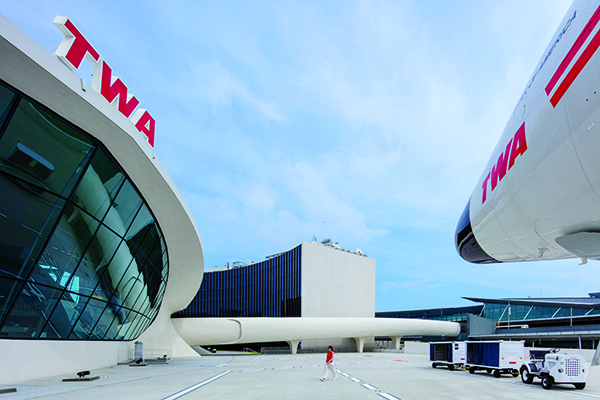
For a one-of-a-kind bar experience, top New York architectural and interior design firm Stonehill Taylor has transformed a mid-century 116-foot Lockheed Constellation L-1649A Starliner aircraft (one of only four of its kind left in the world) into a nostalgic cocktail bar for the TWA Hotel – itself a restoration of architect Eero Saarinen’s famed TWA Flight Centre completed in 1962 at New York JFK Airport. The aircraft was originally built in 1958, and currently sits outdoors between the lobby and the airport’s modern Terminal 5.
Connie has gone through a number of incarnations since it first served passengers for TWA until 1962. After becoming an Alaskan bush plane for five years, to later being sold at auction in 1979 for a mere $150, it also became an airdrop for marijuana in the 1980s. Abandoned in Honduras and later rescued in Maine during the past few decades, the full design team’s direction for its current use demonstrates the dedication to historic preservation and adaptive reuse along with the TWA building that it compliments.
Stonehill Taylor, who spearheaded the interior design, married a contemporary guest experience with design details that evoke the glamour of 1960s air travel and the industrial marvel of aviation. Connie’s design reflects the interiors completed for the hotel’s lobby and guestrooms, putting the perfect final touch to an already world-class destination. Throughout the lounge, there are moments that pay homage to the industrial and technological achievements that defined the era.
Ascending an original staircase with playful “Up, Up and Away” lettering, guests enter Connie through the forward hatch, arriving just behind the pilot’s cockpit. Once inside, the main cabin echoes the TWA Flight Centre’s recognisable terminal “tube” design, with soft glowing ceilings and Eero Saarinen “Chilli Pepper Red” carpet running underfoot.
Working under a tight space with low ceilings challenged the team to find a way to visually open up the space. To achieve this illusion, running almost the full circumference of the cabin at its belly, is a one-foot-lounge from a rivet-lined brushed-steel backdrop inspired by both the plane’s fuselage and Saarinen’s Gateway Arch elevators in St. Louis.
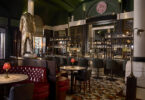
Perhaps the most telling style of the era are the bars 16 reupholstered original airplane seats in a plaid palette of pink, orange, red and beige hues. Additional seating vignettes nod to the original styling of the TWA Commodore Club where chilli pepper red banquette seating with fold-down drink holders and Saarinen tulip tables and stools can be found.
Speaking to PREMIER HOSPITALITY INTERNATIONAL about the project, Lead Designer at Stonehill Taylor, Sara Duffy said: “Additional accents designed in partnership with fabricator Aaron Sciandra include the plane’s window curtains, seat covers and seatback pockets made so guests can feel like they’re about to take off.
“The plane’s interiors were meant to reflect the designs we used in the hotel just feet away. We wanted guests to feel as if they were really boarding a plane at the same location the terminal was stationed in the early 1960s. The terminal’s original structure that is now the hotel lobby is connected to the current-day Terminal 5 at JFK airport so guests can ‘time travel” before or after their actual flight.”
Toward the front of the cabin, guests can capture a picture-perfect moment looking out of the original “constellation” window, once used to guide the plane by starlight on overnight flights. Toward the back, the design team tapped into a more direct inspiration; installing reproductions of two eight-by-four foot murals by artist Mario Zamparelli. The originals, which showed models in destinations from Bangkok to Boston, lined the airplane’s Starlight Lounge, a pre-dinner spot for cocktails in the ‘60s.Following its completion and positive feedback, the project was shortlisted for a 2020 Restaurant and Bar Design award in the Hotel category.
Sara said: “Working with Tyler Morse was deeply inspiring because he is extremely passionate about everything TWA and the terminal’s original architect Eero Saarinen. Tyler’s expectation of excellence pushed the project to achieve the cohesive representation of 1962 that it is. The feedback from the client and guests alike has been incredible, and we’re really excited that both the hotel and the Connie specifically have received quite a few design awards.
“Specifically as designers, it is the incredible history and importance of the TWA Flight Centre as a design icon that makes this a special project for us. Every designer has learned about Saarinen and his work, and now we are having the opportunity to revitalise this iconic project and take it to new levels. It’s a once-in-a-lifetime opportunity.”