
Palazzo Touring Club, Milan
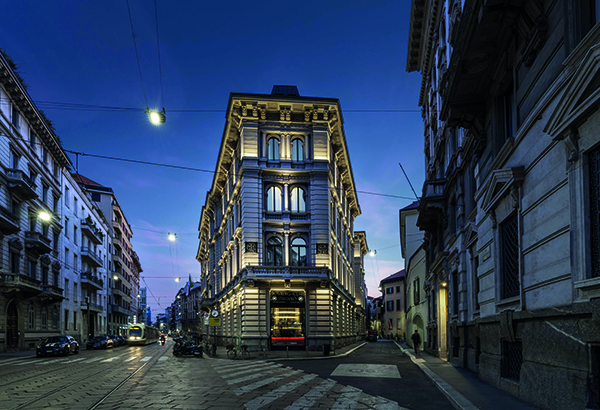
Rich in character with a wealth of beautifully restored and retained historical elements, the new 5-star Radisson Collection Hotel, Palazzo Touring Club Milan – a Radisson Collection Hotel – has been created within an historic former office building in Milan city centre.
Constructed in the early 1900s, the iconic building, on Corso Italia Street, previously housed the offices of Touring Club Italiano (TCI), a major Italian national tourist organisation that promotes the values of travel.
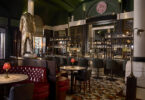
The hotel includes 89 rooms, a reception hall, restaurant and bar, a bookshop, meeting area, spa and gym. It also incorporates the Touring Club travel agency and office and an external court and ‘travel library’, which are open both to guests and the general public. Note: all public spaces are open to the general public, not only the court, travel library and and travel agency
Architectural and interior designers for the project were Studio Marco Piva. Marco Piva commented: “During the design development phase, we considered Radisson’s standards of quality and excellence, and interpreted and adapted these, creating a link to the history of the building. Moreover, we also had to meet the needs of the Touring Club Association, who required the preservation of certain elements considered to be the ‘soul’ identity of the building and its intrinsic history, including the Council Room, the wrought iron staircase and the original coverings of the hall, as well as stone engravings bearing the names of the founding members.
“Nevertheless we still had considerable freedom, which we have used to create a strong synergy between culture and history, contemporaneity and authenticity, to create a new aesthetic and emotional experience.”
The interior design is based on the theme of travel and the founding history of the Touring Club Italiano, which influenced both the materials used and the furnishings. For example, the circle motif which features throughout the hotel such as in the decorative lighting, is linked to the idea of the world map and to the bicycle wheel. The use of leather, for all the headboards or as a material insert, refers to the iconography of the suitcase and its straps.
One stand-out feature of the design is the retained library of the TCI Association, complete with its fine collection of guides and books on the history of tourism and travel. This space, open to the city on the ground floor and mezzanine, can be used both as a library and a place to enjoy dinner or brunch.
Encapsulating 150 years of travel history inside the pages of early guidebooks and fascinating atlases, the library is now a ‘fluid’ space where people can meet, and converse surrounded by books.
Another striking feature is the transformation of the previously under-utilised fourth floor, characterised by the original exposed beams of the attic, and now incorporating 13 new individually different ‘Loft’ rooms, and a new mezzanine floor. Note: the mezzanine floor is within the rooms
Marco Piva said: “One of the most challenging elements of the project was keeping within budget whilst also maintaining the level of excellence required by an internationally renowned brand such as Radisson.
“Furthermore, it was necessary to take into account the different needs and objectives of the project’s various stakeholders, including the investor, the building’s owner, the brand and the administrator, in order to achieve a mutually pleasing outcome.”
In addition, it was important to optimise the interior to include the largest possible number of rooms, whilst also complying with regulations and creating functional and yet aesthetically attractive spaces.
Another design challenge was ensuring smooth ‘traffic flow’ throughout the building – especially considering its change of function from offices to hotel.
Marco Piva concluded: “In the first month of opening, we received a lot of positive feedback from the client and the hotel chain, as well as from guests and visitors.
“For both us and Milan, this project is the symbol of a new post-Covid renaissance in the resumption of tourism. It is also located within my home city, of which I am very proud.”