
LA Central, Puerto Rico
Rich aromas from the rum still, the flaming charcoal grill, tobacco and coffee combine to inspire the rich ambience of the stunning new restaurant La Central by Mario Pagán, in DISTRITO T-Mobile, San Juan, Puerto Rico.
The project to create the new venue was carried out for Prisa Group, with Jeffrey Beers International as designers.
With an atmospheric backdrop that pays tribute to Puerto Rico’s agricultural past, the renowned Puerto Rican chef Mario Pagán has presented his stunning new space and gastronomic expertise to delight the public with his modern tropical cuisine.
The authentic flavours of the country, masterfully executed by Chef Pagán, are present in every aspect of the culinary experience that La Central offers; from its unique charcoal grill cuisine that utilises local ingredients and produce, to the masterfully crafted rum-inspired cocktails.
Michael Pandolfi, design director at Jeffrey Beers International commented: “The client wanted the design to highlight the process of Puerto Rican rum making. The tropical décor was to be inspired by the sugar mills, the distillation towers, the ageing barrels and the cane, coffee, and tobacco crops, from the beginning of the last century.
“For this reason, we have incorporated metals, wood and warm colours reminiscent of this era, while adding contemporary elements, including furniture.”
The venue, with its variety of spaces and seating areas, allows for multiple experiences under a single roof. The restaurant has an ample bar and lounge area, with a copper rum still in the centre, a permanent stage for events and live music, a private room for up to 44 people, a Cigar Room, the main room, the mezzanine, and a terrace. The space can accommodate up to 200 people and is available for events and groups.
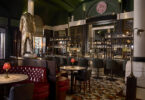
The bar is the main focus of La Central. The 30-foot-tall centre copper rum still focal point was fabricated by a professional still fabricator and incorporates taps to pour local rums. Other design highlights include hanging decorative lighting, made from local rum bottles suspended at various heights, and a large bespoke mural of a sugar cane plantation flanked by oversize vertical wood shelving displaying objects used in the rum distilling process. Flooring is a mix a vibrant yellow, blue and amber tile in a woven textile-inspired pattern.
Straw-woven accents and industrial metal finishes accentuate the main dining room, lit by round chandeliers that evoke a historic ambience. The dining room’s main focus is a two-storey custom-blackened steel rum barrel display with a rum-tasting bar below.
An open charcoal grill kitchen flanks the dining room and provides diners with an experience for all the senses and an appreciation of how all the freshly prepared dishes are made.
Guests can see yet not be seen from the discrete walls of the Cigar Room, which is located on a mezzanine, overlooking the lower dining room through a rum barrel wall. A large humidor is the focal point, opposite leather sofas and cut sugar cane-inspired chandeliers above the seating area. The staircase railing to the mezzanine was also inspired by sugar cane moving in the wind.
Even the bathrooms continue the tropical theme with barrel-inspired restroom pods featuring tropical jungle-themed floor and wall designs.
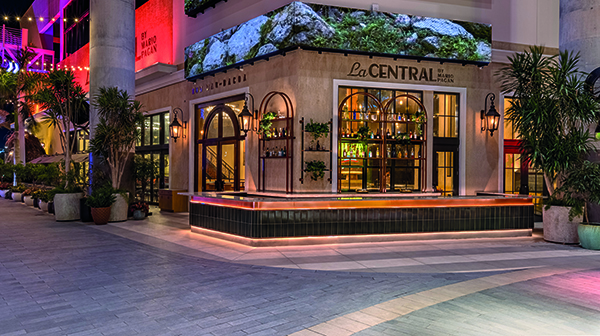
The exterior façade of the building was inspired by the colonial architecture in PuertoRico, as well as the local sugar cane plantations. Details include antiqued stucco, vintage-inspired gas lanterns, oversized windows and an arched door entry, large potted tropical plants and palms.
Michael Pandolfi concluded: “The clients Prisa Group were incredible. Their enthusiasm for the project, as well as for their country and its people, was infectious. We are honoured that they liked the design of La Central so much that we were invited to work on a new project for them.
“As a New York-based design studio, we relish in the opportunity to design projects internationally. It gives us an incredible experience of learning about new cultures: from their surrounding environments, vernacular architecture and local cuisine, as well as traditions and customs. Diving into Puerto Rico’s sugar cane and rum history gave us a whole new insight and a greater respect for this fantastic country.”