
The Ebrington Hotel
The site of a former British Military and Naval base in Derry-Londonderry has been reborn as the 89-bedroom Ebrington Hotel complete with spa and state-of-the-art conference facilities. RPP Architects worked with experienced contractors, McKelvey Construction, to produce a high-end hospitality destination which both respects and draws upon its site’s compelling history.
The Ebrington Hotel is fundamentally shaped by its location, recognising its prominence to the main parade ground and River Foyle, and seeks to maintain a respectful connection with the surrounding listed buildings and Scheduled Monument of the Star Fort Wall. Historic maps and photos revealed a number of different structures on the site particularly between the iconic Clock Tower barracks building and Captain’s House, both of which survive from the 1840’s and which are integral to the design solution. The hotel’s contemporary frontage seeks to connect these two listed buildings resulting in a stunning combination of luxury and preservation.
The hotel & spa has been developed with conservation best-practice principles, clearly delineating the new-build from the existing components to ensure historic legibility was maintained, and ensuring guests can truly experience the history of the site. The spa facilitates views out to the Star Fort Wall, and the contemporary infill structure references the verticality of the Clock Tower with contrasting metal-cladding establishing a material bridge between the new build and the area’s military and naval legacy. A rendered colonnade containing the restaurant and terrace on the ground floor draws upon the proportion and rhythm of the structure which once stood there. A red brick palette to the new-build extension to the rear also forges a visual connection between this 21st century hospitality destination and the early 20th century buildings towards the north-east of the site.
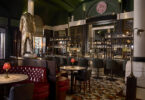
Inside, RPP partnered with Eamon Carberry Design to produce a palatable space for Derry City’s domestic and international tourists alike. The designers articulated their creative approach as ‘colonial style meets Anouska Hempel delivered in a Northern Ireland vernacular’, and the end result is something truly remarkable. Bespoke carpet and soft furnishings produce a visceral one-of-a-kind personality for the hotel & spa, matching the distinctive location where it has been built.
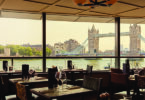
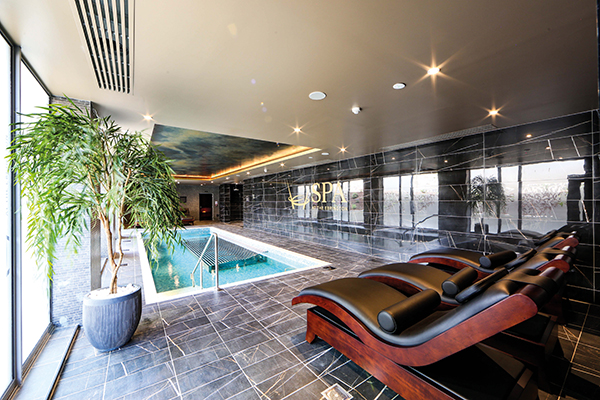
Guests at the Ebrington Hotel are treated to an abundance of spectacular interior design features. Full-height glazing opening up onto the restaurant terrace provides amazing panoramic views of the River Foyle and Peace Bridge. Preserved stairs and balustrades feature alongside a double-height entrance foyer and internal walkway, offering sunlit passage to the main function room and spa pool. The residents’ bar and prefunction spaces are also bathed with light thanks to tall sash windows, illuminating the preserved central chimney breasts in these rooms.
Sustainability has been embedded throughout each stage of the Ebrington Hotel’s design. Primary heating and cooling have been provided by high-efficiency heat pumps and air handling units, and sustainably fuelled local air conditioning units modulate temperature to guarantee guest comfort. The use of inverter driven plant and equipment ensures no waste of energy, and the hotel’s lighting utilises cutting-edge LED technology to grant great energy management. A Building Management system (BMS) controls the entire hotel’s energy use, making adjustments in real time to keep the entire structure efficient. Solar panels have also been added to the building, ensuring a sustainable operation for many years to come.
Kevin Rainey of RPP Architects told PREMIER HOSPITALITY what the project meant to the practice: “With offices in Derry as well as Belfast, we were very aware of the importance not only from a visual perspective, but in providing a tangible legacy in relation to the redevelopment of Ebrington Square also. The ambition was to achieve long term preservation of buildings previously in danger of dereliction, while repurposing and rejuvenating this historic area for contemporary 21st century uses.”
On the hotel’s impact, he added: “[It] contributes positively to the redevelopment of Ebrington Square as an economic kickstarter and attraction, and will encourage further opportunities for development, for example the proposed Maritime Museum and other developments which will hopefully move to the construction phase soon. These will further enhance Ebrington as an extension of the city centre and destination in itself.”