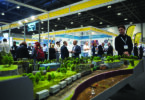
Fehmarnbelt Tunnel
Progress continues on the Fehmarnbelt tunnel, one of the largest infrastructure construction projects in Europe which commenced in 2021. Looking to become the longest tunnel of its kind at an incredible 18km, the Fehmarnbelt tunnel will transform road and rail traffic between Denmark and Germany.
The latest updates relate to the development of a formwork concept by PERI for the tunnel’s central production. Working for Femern Link Contractors (FLC), delivery of this formwork, customised specifically for the project and weighing a total of 10,000 tonnes, was completed in spring 2023.
Fitted via the sequential installation of 24-metre-long concrete sections, PERI’s formwork was produced through monolithic concreting and a lack of ties in the outer walls to reduce the chances of water penetration. This approach limited material waste during construction and will optimise the tunnel’s functionality when it opens.
Each of the 79 total tunnel elements is made up of nine concreting sections, stretching 45 metres wide and 9 metres tall. Following successful concreting, each element was fitted with bulkheads at both ends and sealed.
Delivery of these concrete elements along with accompanying special steel components required precise planning and coordination. The containers for each concrete element were filled with water, and thanks to the tight seals, each was able to float for safe and efficient transportation. The steel components, produced in Poland, Italy, and PERI’s site in Weißenhorn, Germany, were delivered via a system of 12 ships and 250 trucks. February 2023 saw the one millionth part of the formwork successfully delivered to the construction site.
On the project’s sheer immensity, Florian Ehrlich, Head of Group Project Execution, told PREMIER CONSTRUCTION: “The sheer number of parts shows the scale of the project – about 1.2 million parts had to be delivered to the production site. This led to a holistic concept for our suppliers and logistics, because the parts were transported on more than 200 truckloads and 12 shiploads.”
Planned for a 2029 completion, the Fehmarnbelt tunnel looks to revolutionise travel between Denmark and Germany. By reducing travel times for both rail and road users, the tunnel will improve passenger experience while also reducing the environmental impacts of travel between Northern and Central Europe. Comprising 5 inner tubes, the tunnel will facilitate two-lane motor vehicle transportation, two-lane railway passage, and a single tube for services and emergencies.
Construction on the tunnel began at the end of 2021, connecting Lolland, Denmark with the German island of Fehmarn. The €10 billion project showcases incredible construction practice and expert coordination across manufacturing, delivery, and installation professionals. Divided into a series of development stages, the project has so far seen the completion of the site preparation, work harbours construction at Rødbyhavn and Puttgarden by Femern A/S, dredging in the Fehmarnbelt and new land area development, tunnel factory construction, and formwork tunnel components construction. Over the next few years, rigorous testing will take place.
Florian also said the project’s complexity is “one of the aspects making it a unique one. Our solution is customised on many levels: from technical planning to the manufacture of our products and logistics; we have found individual solutions to meet the requirements.”
As well as being technically astounding and logistically solid, the Fehmarnbelt tunnel is being developed with ecological considerations in mind at every stage. 19 million cubic metres of excavated material, for example, are being reused for land reclamation projects and the development of new overpasses, ramps, and embankments for the local ferry terminals.