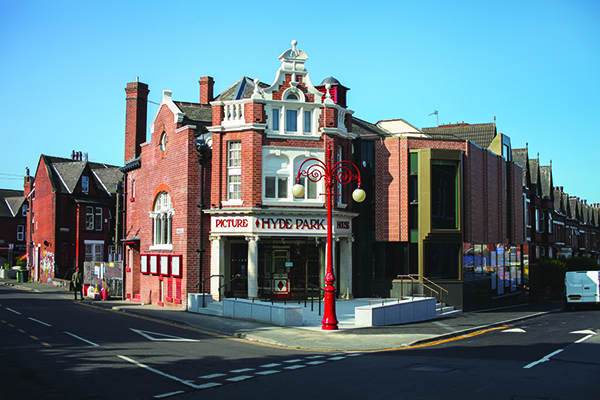

Hyde Park Picture House
Leeds’ famous Hyde Park Picture House – treasured as the UK’s final gas-lit cinema – has undergone a mesmerising redevelopment thanks to the work of Page\Park Architects and the long-term efforts of The Picture House organisation. Beloved by the city, the Grade II listed cinema’s improvements have sought to preserve and build upon its iconic aesthetic and legacy, and the end result doesn’t disappoint.
The Picture House organisation first began the project’s preliminary stages in 2005, with two main objectives in mind. The first was to attend to the building’s key architectural failings, namely crumbling stone and plasterwork, leaking windows, and water ingress. The second was to build upon this conservation work and introduce new facilities to Hyde Park Picture House, not only protecting its functionality for the short-term, but improving the experience of regulars and first-timers alike for years to come.
The conservational dimension of the project was informed by a fundamental desire to protect the details that make the historic building so special. The works were comprehensive, repairing damage throughout and drawing out the cinema’s celebrated historic details. The gas lighting, for example, has been emphasised, playing upon the venue’s history and storied identity. To achieve this work with due diligence to the structure’s age and listed status, Page\Park consistently recorded and surveyed the cinema’s condition to develop a complete picture of problem areas. This enabled thoughtful repair work and a compassionate inclusion of traditional detailing techniques.
On the creative side of the project, additions to Hyde Park Picture House were designed and installed with the aim of achieving two goals. Hyde Park Picture House’s original identity had to be observed and respected, but its accessibility limitations and slight lack of 21st century appeal also needed to be acted upon. The result of Page\Park and its collaborators’ work is the perfect blend of forward thinking and historical acknowledgement.
The exclamation mark of the project has to be the 3-storey extension which has facilitated the addition of a variety of facilities to the cinema. Creating room for a café, foyer, and additional toilets, the expansion’s design plays upon the cinema’s 107-year history. Red brick and granite weave the extension seamlessly into the fabric of the original architecture, and 35mm film reel motifs decorate the exterior brickwork – a wonderful nod to Leeds’ historic reputation for filmmaking. Large windows in the new foyer splash the café with brilliant light and energy, creating a welcoming community space for all to enjoy. The cinema’s main steps are also now joined by a level access ramp and automatic doors, Inside, a new lift grants swift access to the new floors.
The highlight of the extension is without doubt the new second screen – a game-changing addition to the cinema! Excavated from the basement, the new 50-seat auditorium improves Hyde Park Picture House’s revenue capacity while offering a more contemporary visitor experience. By diversifying the cinema’s appeal for moviegoers, the development gives those looking for the classic picture house experience and those seeking the comforts of modern design equal reason to stop by.
As part of Leeds Heritage Theatres Group, Hyde Park Picture House is a staple of its community. Locals and visitors are drawn to its screenings of arthouse, independent, and classic films, and the venue has long been a prized spot for the city’s devoted student community. In this light, it’s also incredible to see the project adopt sustainability principles to improve the historic building in the categories of energy efficiency and performance. A great example of this is the heat recovery system ventilation system, which includes a newly insulated roof, refurbished windows, and draft lobby at the main entrance. At every stage, the redevelopment project has achieved the incredible feat of bringing Hyde Park Picture House into the contemporary spotlight while allowing it to retain the quintessential charm that makes it one of Leeds’ standout landmarks.