
Sustainable Workspaces at County Hall
Sustainable Workspaces and Material Works Architecture have completed work reinventing the fifth floor of the Grade II*-listed County Hall into a climate technology business haven.
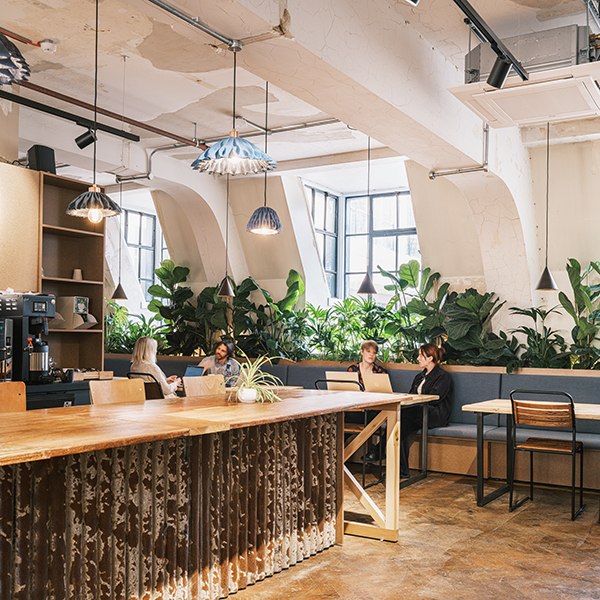
Under the Sustainable Ventures vision of providing eco-friendly startups the facilities they need to thrive, Sustainable Workspaces acquired the 3,600-metre space and worked closely with Material Works to devise and implement a low-energy, sustainably crafted series of private offices, event spaces, innovation labs, cafes, and breakout areas.
The design at County Hall adhered to a number of key sustainability principles, the first of which being a light touch retrofit. Prior to works commencing, time was taken to spot which fabrics and fittings could be utilised in the design and draw up plans that made the most of what the site already offered. From there, attention shifted to problem areas, with repairs only being undertaken where serious problems lay. Throughout this planning and design process, Material Works sought to hold true to an ‘as found’ concept, with the finished product being a space of character and history, rather than being sculpted and tamed to perfection. Exploring the space, the chief benefit of this approach is the abundance of features that have survived from the site’s former life as Greater London Council’s office. Across windows, doors, flooring, and plastering, the space retains a wear and character that brims with life.
This quality of utilising pre-existing assets also accompanied the development of the project. New structures were limited to those relating to comfort, and components such as joinery were constructed with tough materials and demountable systems in place to allow each piece to be re-used or re-located and to reduce future waste. This malleability has also been integrated into the plywood design of the workspace layout. Minimal mechanical fittings mean the space can be reorganised to create new pockets of space according to different needs. With furniture, pieces were reclaimed from reclamation yards, meaning that many of the WCs and cisterns, light fittings, and doors have been reused.
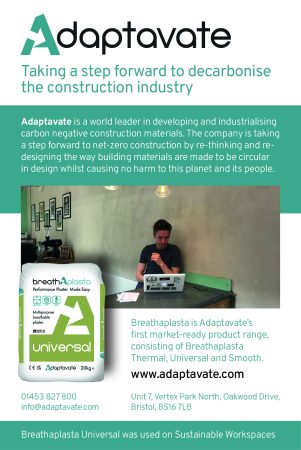
Another core focus was material selection. Sustainable Workspaces and Material Works steered away from the high-carbon products of conventional construction projects and instead prioritised by-products; those acquired from agriculture or forestry. Many joinery finishes have been produced from waste coffee and vegetables, carpentry has been created using composite boards of agricultural waste, and a countertop has been formed from reclaimed building rubble. These by-products have been used in conjunction with natural materials that are biodegradable and toxin-free. Good for the site’s occupants as well as the planet, materials such as natural lime plasters and lime-based paints optimise air quality and require less carbon for production. Adding to this comprehensive sustainability are degradable bonding agents which have been used to ensure materials can be separated and recycled.
The work of Sustainable Workspaces and Material Works has not only produced a site with character and the flexibility to facilitate new and exciting startups looking to make a difference, but also achieved a carbon output lower than the average office fit-out. A total of 1,150 tonnes of carbon has been saved, marking the County Hall site not only a triumph of interior design, but a sign of what the future holds for the industry.
ADAPTAVATE