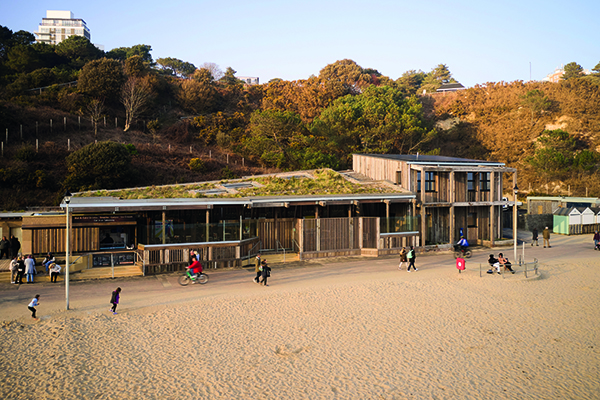

Durley Chine Environmental Hub
Showcasing the virtues of sustainable design on Bournemouth’s glistening seafront, Durley Chine Environmental Hub has been selected as the winner of the 2024 RIBA South West Regional Award.
The work of Footprint Architects and Seascape South (Bournemouth, Christchurch and Poole Council’s in-house construction team), the site is a multi-functional space open to educational and exhibition use by the public.
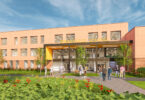
On its surface, Durley Chine Environmental Hub is a modest three-structure site bound by an overhead timber canopy, comprising a kiosk, welfare/education building, and public WC. Step a bit closer, however, and the magic of the building soon becomes clear.
Footprint Architects’ and Seascape South’s use of reclaimed timber is what visually impresses. 45 tonnes have been recycled, removed and stripped down from groynes across BCP Council’s 17-year Poole Bay Beach Management Scheme, and after being deconstructed and meticulously selected, this timber has been milled and incorporated into the framework of the decking. Along the exterior, this reclaimed timber has also been used for cladding, balustrade posts and spindles.
Timber was also sourced from Forest Stewardship Council-approved sources for the building’s roof. This section required robust structural integrity to withstand the weight of the roof, and the standard of this timber component’s construction is simply sublime. The canopy roof also incorporates reclaimed groynes, and a further seven tonnes were recycled from a German naval shipyard to complete the decking floor.
Durley Chine Environmental Hub’s eco-conscious composition is matched by its sustainably designed functionality. It has been constructed to Passivhaus standards for energy efficiency, and the list of design components that contribute to this achievement is remarkable.
The first aspect to note is the building’s insulation. A twin wall system combines with recycled magazines and triple glazed Rationel windows to ensure the building is airtight and able to trap heat. Complementary components which contribute to this energy efficiency include a heat recovery air handling unit which monitors interior air temperature and quality, and the brise soleil at the structure’s front which shades the interior with its bladed shape and facilitates solar warming in winter.
In order to produce zero-carbon energy, Durley Chine Environmental Hub has been fitted with photovoltaic panels along its roof. The construction of a substation also permits the site to not only feed power back into the grid, but also draw from it in winter. These features generate power for the building’s day-to-day usage as well as for seafront vehicle EV charging points.
Attention must also be given to the site’s green roof. Not only is it visually compatible with the cliffs and vegetation behind it, but an ecological compatibility has also been established. Low lighting and boxes installed here provide an alluring habitat for bats and starlings, and planting across its surface gives the roof a natural look that blends with its organic backdrop.
Durley Chine Environmental Hub has been built to tackle the problem of waste and litter on Bournemouth, Christchurch and Poole’s beaches. Being in close proximity to BCP Council’s Waste Transfer Yard, where debris and litter removed from the beach is stored, the building doubles as a welfare refuge for staff collecting the rubbish and an educational facility for schools, residents, and visitors to learn more about environmental guardianship. Its exterior can host public exhibition events that champion participation in protecting local coastlines, and at the Durley Kiosk, beachgoers can enjoy refreshments completely free of single use plastic.