
The National Portrait Gallery
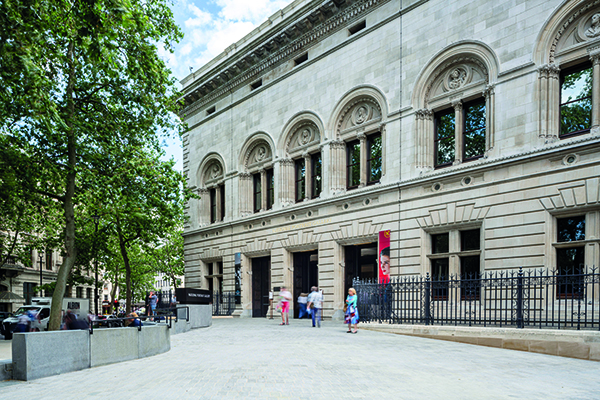
London’s National Portrait Gallery, situated off Trafalgar Square, has undergone a significant transformation aimed at enhancing the visitor experience and revitalising its historic spaces, securing the project a RIBA London Award 2024, a RIBA National Award 2024 and a shortlisting for the RIBA Stirling Prize 2024.
Alongside careful structural refurbishments to the building, originally constructed in 1896, the project has also seen a complete representation of the Gallery’s Collection, as well as the creation of new areas integrated to improve the visitor experience.
The building’s remodelling was coordinated by Jamie Fobert Architects in collaboration with Heritage Consultants, Purcell. Working with award-winning contractors, Gilbert-Ash, the Inspiring People project has seen the Gallery’s oldest sections renovated, including the Grade I listed Blavatnik Wing, which has gone largely unchanged since the building’s original construction.
As for new additions, office space has been restored back into stunning top-lit galleries, now known as the Weston Wing. One of the project’s jewels is the new Mildred and Simon Palley Learning Centre, a space comprising of three studios, each packed with specialist equipment and breakout spaces. The centre’s educational benefits, coupled with the more welcoming Ross Place entrance and North Façade forecourt, look to improve the public’s experience of the Gallery.
Project Manager, Dermot Bradley, explained that installing the new pedestrian footbridge between the forecourt and entrance presented one of the project’s biggest obstacles. The original plan had been to transport the bridge in two pieces, but this changed to five due to the sheer size and weight of the structure. “This resulted in a series of redesigns and resequencing of some works to ensure the programme was kept on track.”
He added: “To give an idea of the scale of the bridge, one of these sections weighed 16.5 tonnes. Logistically it took a significant amount of planning to bring such large structures into central London with permission only granted for it to come in after 9pm.”
The refurbishment’s most impactful effects can be seen in the galleries, where over 1,100 portraits from the Collection have been installed. Here, Nissen Richards Studio has reworked not only the interior design, but also, together with the Gallery’s curatorial team, the display of the Collection itself. After winning the tender for the project back in the height of the pandemic, the interpretation designers immersed themselves in the Gallery’s history in order to optimise the space as effectively as possible.
The primary focus in terms of design was colour. Nissen Richards Studio introduced a dynamic new palette to create a lively, cohesive series of interior spaces. Vibrant wall colours can now be enjoyed – some painted, some adorned with matt pure wool sourced from Gainsborough – which ignite the exhibition rooms and function as a guide for those navigating the different sections. Historical periods are characterised by different colours, and visitors will notice tonal shifts as they wander through the different sections and more easily identify the sequencing of each as a result. This focus on colour works in tandem with the natural light which now floods inside thanks to the reopening of the perimeter windows on the first floor. Freshening the interior, this light can be managed by newly installed gauze blinds which allow sensitive portraits to be protected.
To optimise the Collection itself, Nissen Richards Studio helped guide the display of the portraits within the spaces. The chronological display remains, with deliberate focus having been made to show a wider range of portraits, including those which explore the experiences of under-represented groups. As well as helping the Gallery better achieve its aim of telling a wider range of British and international stories through portraits, these rearrangements will provide greater dynamism across the spaces, increasing public interest and ensuring greater long-term financial sustainability. As for further improvements, the galleries have been imbued with new display furniture, interpretation panels, and plinths which provide the illusion of visitors being greeted by history.
Pippa Nissen, Director of Nissen Richards Studio, said that despite the challenges associated with working collaboratively during the Covid-19 pandemic, being involved with the National Portrait Gallery project was a great experience: “This has been just the most exciting project to work on; a dream project, once in a lifetime. It encompasses everything I love about our work – people, paintings, sculpture, photography, colour, curators. From beginning to the end, it has been a rollercoaster ride, but I have never at any stage forgotten what a privilege it has been to work for one of the best galleries in the world.”