
The Neue Nationalgalerie Berlin
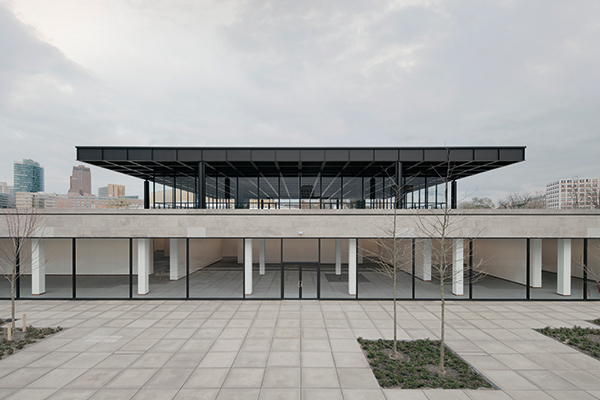
The Neue Nationalgalerie in Berlin is an icon of twentieth-century architecture. Planned and built from 1963 to 1968, the steel and glass structure is the only building designed by Ludwig Mies van der Rohe in Europe after his emigration to the USA.
After almost fifty years of intensive use, the listed building required a comprehensive refurbishment. The contract for planning and implementing the necessary measures was awarded to David Chipperfield Architects in 2012. Founded by David Chipperfield in 1985, the international company with offices in London, Berlin, Milan, Satiago de Compostela and Shanghai specialises in cultural buildings. Projects led by Chipperfield have included the reconstruction of Berlin’s Neues Museum on the Museumsinsel Berlin, which reopened in 2009, and the design of the James-Simon-Galerie, which opened its doors in 2019.
The aim of the Neue Nationalgalerie technical overhaul was to refurbish the existing fabric to current technical standards with a minimum of visual compromise to the building’s original appearance. The functional and technical upgrades include upgrading the air-conditioning and fire-prevention system, refurbishing the building envelope, eliminating the causes of glass breakage, renovating the structural concrete, renewing the building services and improving disabled access. Another focus of the project was to fulfil the requirements of a modern museum regarding, safety, lighting, storage facilities and visitor services.
The necessity of an extensive repair of the reinforced concrete shell and the complete renewal of the technical building services required an in-depth intervention. In order to expose the shell construction, around 35,000 original building components, such as the stone cladding and all the interior fittings, were dismantled. After their restoration and modification where necessary, they were reinstalled in their precise original positions.
The key to the complex planning process for this project was finding a suitable balance between monument conservation and the building’s use as a modern museum. The unavoidable interventions to the original fabric within this process had to be reconciled with preserving as much of the original substance as possible. Though the essential additions remain subordinate to the existing design of the building, they are nevertheless discreetly legible as contemporary elements. The refurbishment project does not represent a new interpretation, but rather a respectful repair of this landmark building of the International Style.
Following the completion of the refurbishment, the project was awarded a RIBA International Award for Excellence 2024. The RIBA International Awards for Excellence celebrate the most exemplary architecture from across the world and the 22 winning projects represent a significant cultural shift in the way that architecture is designed and built for current and future generations. From private homes and subway stations to museums and schools, each project is an example of the highest calibre of architectural response to social, cultural and environmental challenges.