
The Memoir Club
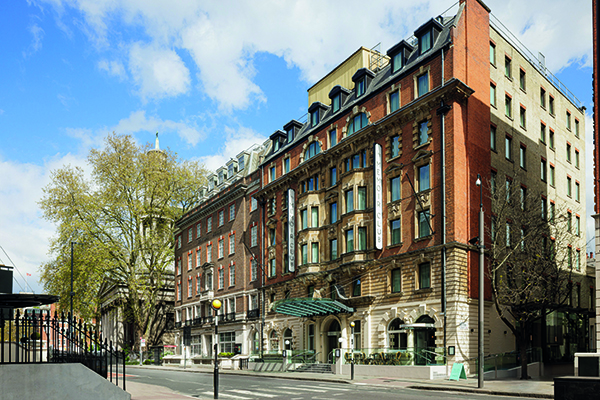
Marking a new chapter in London’s cultural history, ICA Studio recently revealed the beautifully redesigned interiors of The Memoir Club — a transformative reinvention of The Ambassadors Bloomsbury Hotel.
Since opening its doors in 1908, the historic building has become known as an independent beacon of hospitality in the heart of London and remained a cherished haven for travellers and locals alike ever since. This May the well-loved hotel unveiled its bold new identity, The Memoir Club, with an interior concept that pays homage to Bloomsbury’s long established cultural and societal influence. Inspired by the legacy of the Bloomsbury Group — a group of innovators, writers and artists who lived and socialised in the area — the hotel takes its name from the club set up in 1920 by the circle of Bloomsbury-loving friends. The purpose of this club was to provide a platform for personal narratives to develop, and to foster a sense of community.
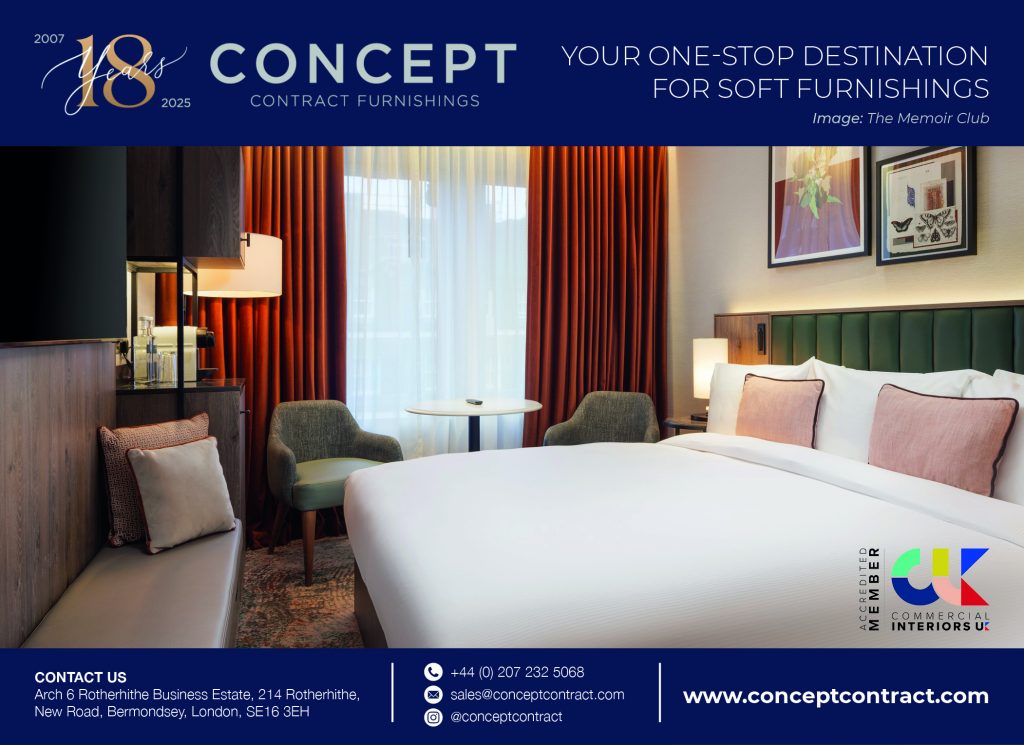
Prior to the relaunch, Architects and Interior Designers ICA Studio, had completed a substantial refurbishment of the guestrooms, corridors and public areas, with the ensuite bathrooms also being treated to a light touch update. Split into three room categories, 76 Club rooms 17 Luxe room and 7 Large Luxe rooms ICA Studio chose a different colour palette for each rom type, to help differentiate them, as well as developing a brand-new design narrative that feeds into the hotel’s context. To complete the look of the rooms, Concept Contract Furnishings provided curtains and soft furnishings for the spaces.
After completing in depth research into the surrounding residential area, ICA Studio chose to centre their design around three distinct pillars, resulting in a layered and meaningful design language. Literary Heritage, in particular the life ofVirginia Woolf, who moved to the area in 1904 and was a key member of the Bloomsbury Group, helped to inspire the narrative texture and tones included throughout the spaces.
Bloomsbury is also known for its pioneering contributions to medicine and public health, with The London School of Medicine for Women, the first UK institution dedicated to training female doctors, and the London School of Hygiene & Tropical Medicine both originating there. As a result, themes of strength, innovation and resilience, are subtly woven into the design.
As the name suggests, Bloomsbury has a strong horticultural identity. Planned during the Regency era, it’s renowned for its garden squares — including Russell Square and Bedford Square — which brought a soft, natural influence on the design.
PREMIER HOSPITALITY spoke with Lorraine Sansom Associate at ICA Studio who explained: “The location had a significant influence on the overall design concept, informing both the narrative and material palette throughout the hotel. We translated Bloomsbury’s rich character and historical significance into tangible design elements — from the artwork and carpet design to the colour palette, which was inspired by the area’s famous garden squares and seasonal floral tones.”
She continued: “A direct reference to the immediate surroundings is found in our subtle use of terracotta hues throughout the interior. This was inspired by St Pancras Church, adjacent to the site, whose crypt is guarded by a row of Caryatids. Unlike their Greek marble counterparts, these figures are crafted from terracotta — a local and distinctive detail that felt meaningful to reflect in the space. By drawing from both the visual and cultural context of Bloomsbury, we ensured the design felt rooted in place while offering guests a deeper connection to the area’s story.”
Artwork was also an important factor in bringing the hotel’s new interiors to life, with ICA Studio collaborating with the client and two dedicated artwork consultants to ensure every piece was thoughtfully considered and placed with intention. From the commissioned works in the reception area to the carefully curated cluster groupings in the guestrooms, the art was used to enhance the character of each space. Working with two different consultants gave the opportunity for each of the areas to develop its own distinct identity — offering guests a unique experience as they move throughout the hotel.
Beyond the guestrooms, visitors to The Memoir Club can head to the Adeline Restaurant, named after Virginia Woolf’s birth name, the invigorated space is perfect for intimate dinners or informal lunches. Serving up an innovative Eastern-Mediterranean menu inspired by Virginia’s travels guests can enjoy a flavourful journey across the continent, from the comfort of their dining chairs.
The Memoir Club also features a range of stylish and cleverly designed event spaces both large and small, which are highly flexible and the perfect environment to foster fun, creativity and professional engagement.
When asked what it means to be a part of this culture-defining rebrand and renovation, Lorraine commented: “Every project we take on is important to us, regardless of scale or client structure. Led by an independent hotelier, this project was particularly exciting — the hotel’s location was an instant draw. It was a pleasure to help bring the client’s vision to life in a way that reflects both their aspirations and the character of the area.”