
Norwich Castle
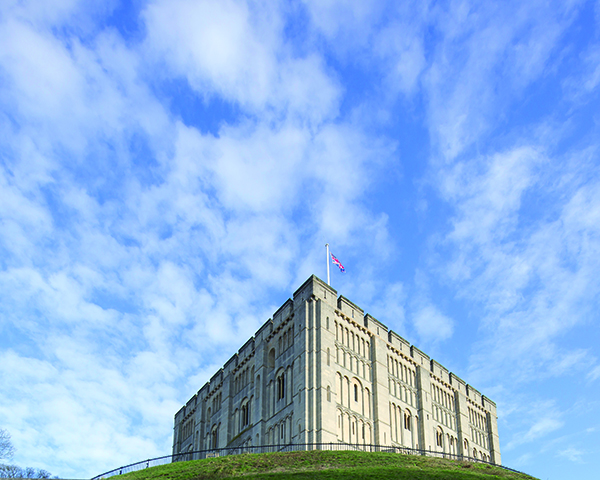
Norwich Castle officially reopened to the public on 7th August 2025 following a spectacular £27.5 million transformation, breathing new life into one of the UK’s most iconic historic landmarks.
Feilden+Mawson were entrusted with the ambitious refurbishment of the Grade I listed Keep nestled in the heart of Norwich, appointed as Architects by Norfolk Museums Service in 2017.
The vision was to create an accessible, world class, visitor experience and improve functionality as a cultural and educational venue, balancing modern interventions to futureproof the Keep while honouring its heritage.
Originally constructed by William the Conqueror, the Keep as it stands today completed between 1095 and 1121 – is one of the UK’s most important 12th-century structures. It functioned as the county gaol from the early 1300s, and in the late 1880s was transformed into a museum.
The refurbishment returns the castle to its original 900-year-old layout, based on rigorous academic research. The architectural design, beyond the re-established medieval layout, principally looked to reorganise spaces and circulation, making the museum more legible to visitors, becoming easier to navigate, and increasing capacity. The project also provides renewed visitor facilities including a new entrance, toilets, shop, café, and education spaces, all designed to show off the Keep whilst being light, fresh and in keeping with the context. The building is now accessible to all from basement to rooftop battlements thanks to new stairs and internal lift, meticulously detailed in a deliberately contemporary style, but intended to be in harmony with the historic building.
Key historic features are now prominently showcased, including via a new glass atrium over the entrance framing the east Keep wall, and medieval pier bases and archaeology revealed in the basement with light sculptures marking a lost arcade. A new glass and timber-finned bridge connects the reinstated principal floor with the castle’s newly refurbished and extended 1960s extension, providing wheelchair access into this most important of spaces. New interventions into the space, with the exception of the reinterpretation of the principal floor, were designed to be wholly contemporary in their form adding simple elegance to the Norman Keep.
A highlight of the project is The Gallery of Medieval Life: A British Museum Partnership, the British Museum’s first medieval gallery outside of London, featuring over 900 objects arranged around a mezzanine with striking views of the ground floor.
Alongside visitor-facing improvements, crucial conservation work was carried out across the building to repair the roof, stonework, and structural elements to ensure the historic structure’s performance and longevity.
The refurbishment has not only revitalised the Keep as a cultural and educational asset – it is now better equipped to support the long-term sustainability, financial and community goals of the Norfolk Museums Service, securing its place for generations to come.
The project was made possible thanks to National Lottery Players through a grant of over £13 million from The National Lottery Heritage Fund. The overall project budget is £27.5 million, with £12 million contributed by Norfolk County Council and the remaining funding provided by other sources.
Erin Davidson, Feilden+Mawson Partner and Royal Palace Reborn Project Lead:“It’s been a privilege to contribute to the transformation of such an iconic historic site. Our aim was to create a seamless dialogue between the old and the new, introducing modern interventions like the lift, new circulation routes, and rooftop terrace in a way that enhances access, interpretation, and visitor experience while remaining deeply respectful of the castle’s medieval fabric. The new entrance, education space, and bridge not only open up the site physically, but also symbolically, inviting broader audiences to engage with its rich history in fresh, meaningful ways.
‘’Working on the re-introduction and reinterpretation of the principal floor was a unique opportunity to bridge centuries of architectural history. Our role was to technically deliver detailed elements using modern materials and construction methods, while ensuring they faithfully reflected the look, feel, and craftsmanship of the Norman period. It was a careful balance of precision, innovation, and deep respect for the original fabric – bringing the spirit of the medieval castle to life for contemporary audiences.”
Dr Tim Pestell, Norfolk Museums Service’s interpretation lead on the Royal Palace Reborn project:“The reopening of Norwich Castle Keep is the largest heritage development project opening in the UK this year. It is a key project for Norfolk Museums Service, and it has been a pleasure working with Feilden+Mawson on what we hope will be a will be a centre of learning, inspiration and economic regeneration for years to come.
“Working in a 900-year-old building has presented so many opportunities and challenges and Feilden+Mawson have designed changes to the structure that have greatly improved access and sensitively enhanced our understanding of the building’s rich heritage.”