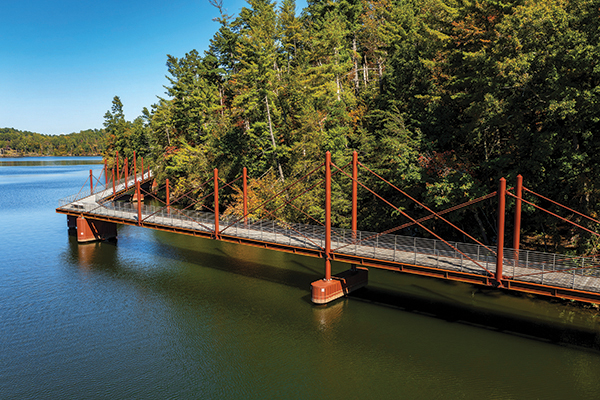

Hickory Riverwalk Bridge
Completed in 2024, The Hickory Riverwalk Bridge stands a celebrated achievement in modern infrastructure, combining utility with architectural elegance.
Serving as a key connection between Hickory, North Carolina’s local park and previously inaccessible areas next to the lake, the bridge forms a crucial link within a new trail system designed to improve the city’s connectivity.
Its strategic location and design have made it a well-respected and valued community asset, enhancing access to the waterfront while also sparking new economic development in the area.
The bridge’s innovative design and distinct structure led it to receive the prestigious American Architecture Bridge and Infrastructure Award. This recognition highlights its role within the community, not only as a pedestrian pathway but as a symbol of sustainable urban design that serves both practical and aesthetic purposes.
Designed with the future in mind, the Hickory Riverwalk Bridge employs an inverted Fink truss configuration—a rare choice in contemporary bridge design. First patented by Albert Fink in 1854 and once common on American railroads, the Fink truss largely fell out of favor in the 20th century, making its modern use noteworthy.
Adding to its unique yet forward-thinking aesthetic, the bridge’s design features multiple diagonal members projecting up to top posts, creating a striking, sawtooth appearance when viewed from the side. This creates an eye-catching silhouette that contrasts beautifully with the surrounding landscape.
The bridge spans 520 feet (158.4 m) across the water and stands 31 feet (9.4 m) at its tallest tower. It is carefully integrated into the landscape; its dark-brown reddish steel merging effortlessly with the natural environment.
The varied heights evoke a sense of maritime history, mirroring the changing elevations of docks along waterways. In addition, the structure does not feature a top chord, which is a common in many bridges, and instead relies on its bottom chord to support the load, enhancing both its design and efficiency.
Its reintroduction represents a fusion of historical engineering with contemporary needs, offering proficiency, strength and aesthetic appeal.
Highly functional yet experience-led, the Hickory Riverwalk Bridge also offers a central seating area that offers visitors the chance to pause and take in the sweeping views of the lake. Subtle lighting across the bridge further enhances its nighttime appeal of the lake, creating a safe and welcoming space for pedestrians.
The wooden walking deck, with its natural materials, invites people to explore and enjoy the surrounding beauty.
As Hickory continues to grow and develop, the Riverwalk Bridge remains a catalyst that reflects the city’s commitment to infrastructure that connects people, preserves the environments and embraces innovative design.
The bridge not only serves as critical link in Hickory’s trail system but has also become an important destination for residents and visitors alike, drawing attention to the city’s dedication to sustainable urban growth and its vibrant waterfront.