
St Mark’s Episcopal Church Portobello, Edinburgh
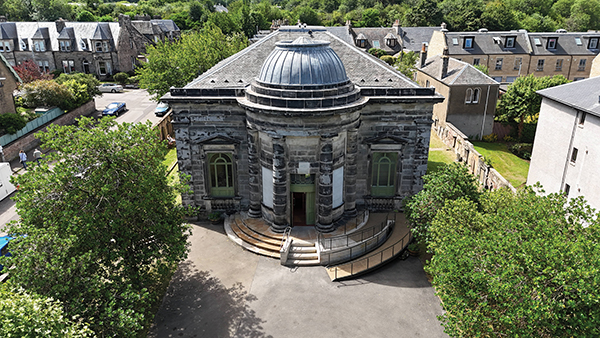
Balancing heritage, sustainability and community, St Mark’s Episcopal Church in Portobello, Edinburgh, has re-opened after undergoing a major refurbishment.
Established in 2021, Taft Architects have a reputation for revitalising and extending the life of heritage assets by keeping them relevant, vibrant and energy efficient. Working as the architects for this project, Taft Architects have been recognised by the Civic Trust Awards for the thoughtful conservation of St Mark’s Church.
Shortlisted as regional finalists in the 2026 AABC Conservation Awards, a national accolade that recognises exemplary standards in historic building conservation and part of the Civic Trust Awards, Taft Architects demonstrated technical excellence, craftsmanship and civic contribution throughout the project.
Edward Eastham, Director at Taft Architects said: “We are truly honoured to have been shortlisted for a Civic Trust Award for our work on St Mark’s Episcopal Church.
“The project reflects our belief that conservation is about more than preserving the past – it’s also about giving buildings the opportunity to continue serving future communities. Every intervention was designed to keep St Mark’s relevant, vibrant and alive – it’s a philosophy that guides everything we do.”
In tandem with Lee Boyd Architects, the core aims for the restoration of the Category B-listed Neo-Classical Church, were to conserve the external fabric to reduce the long-term maintenance demands, upgrade the building’s thermal performance, address areas of deterioration and improve accessibility and functionality for the congregation and wider community.
Supporting the Church’s Climate Net Zero Strategy, Taft Architects introduced a series of targeted thermal upgrades. Within the Nave roof space, insulation was installed and the windows were carefully repaired and reglazed. The team discreetly added secondary glazing behind the listed stained-glass windows to enhance the Churches energy performance, while ensuring the architectural integrity was preserved.
To address the internal damp issues caused by historic water ingress, traditional, non-cementitious materials were re-introduced to allow the building to ‘breathe.’ This choice supports the Churches long-term resilience, whilst celebrating the original architecture.
At the striking, semi-circular Doric arched entrance an accessible ramp was introduced so guests with mobility issues can access the site with ease.
The interior of the Church transforms the spaces feel and function, serving generations to come. Historic features are uplifted through a warm colour palette and careful material choices, like the limewash finishes employed for the plaster surfaces. This addition not only highlights the heritage detailing, but guarantees each area is protected from moisture.
As part of the project, professional painting and decorating services were provided by George Nicolson Decorators. Ewan Nicolson, Joint Managing Director at George Nicolson Decorators, advised: “For us, this was an opportunity to work with HM Raitt on a larger project within an impressive historic property. The project had it’s challenges due to the existing substrate conditions and the majority of working being at height, whilst co-ordinating through HM Raitt’s sequencing for other trades.”
Integral improvements to the site’s kitchen were made to enhance the facility, while the implementation of a second toilet has allowed the Church to become more flexible, comfortable and hospitable to their guests.
Rev Dr Sophia Marriage, Rector of St Mark’s commented: “We wanted St Mark’s to feel open, flexible and welcoming to everyone who walks through its doors. Working with Edward and Alan at Taft Architects, to bring that vision to life has been deeply rewarding.”
Taft Architects have combined their deep technical expertise with a human-centred, environmentally conscious approach to revive one of Portobello’s most treasured historic buildings. St Mark’s, in anticipation of its 200-year anniversary, can now continue to be a place of worship and local hub for the community.