
Black Rock Regeneration Project
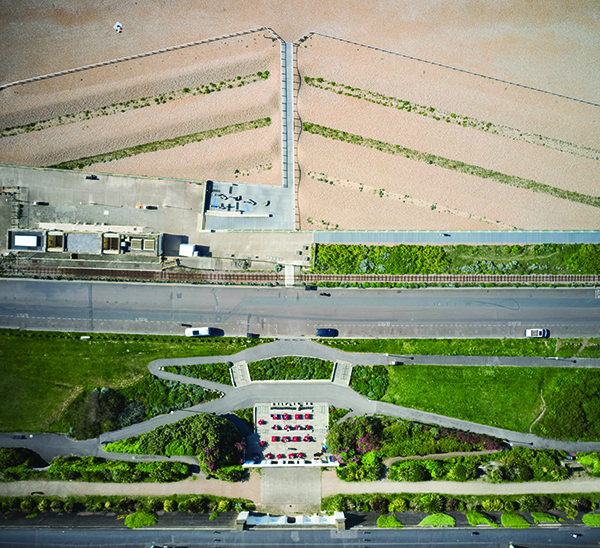
On the eastern edge of Brighton’s seafront, a once-derelict stretch of shingle has been transformed into one of the UK’s most ambitious examples of sustainable coastal regeneration. The Black Rock Regeneration project, led by LUC and commissioned by Brighton & Hove City Council, has reimagined a neglected gateway site as a thriving ecological landscape and community destination.
For decades, Black Rock was defined by disuse — a windswept expanse of underutilised land between the marina and the city’s iconic Georgian and Regency terraces. Today, it tells a different story. At the heart of LUC’s design is a 1.5-hectare vegetated shingle habitat stretching along a one-kilometre frontage. Created as both a wildlife sanctuary and ecological mitigation for future development in the area, the habitat is now considered nationally significant; a rare example of large-scale coastal restoration embedded within an urban setting.
Working in partnership with experts from Royal Botanic Gardens, Kew, the team introduced more than 1,200 specially propagated plants grown on from site cuttings, to thrive in the harsh, saline conditions of the Sussex coast. Species typical of Britain’s fragile shingle ecosystems — themselves a globally scarce habitat — now provide food and shelter for invertebrates and coastal birds. What was once barren ground has become a biodiverse corridor, softening the hard edges of the built environment and reconnecting the city to its natural shoreline.
Accessibility was central to the project’s ethos. An 800-metre boardwalk, constructed using 220 tonnes of upcycled plastic, threads gently through the landscape. Perched above the shingle, it protects sensitive planting while offering pedestrians and wheelchair users a safe, scenic route from the city to the beach, away from road traffic. The boardwalk not only reduces environmental impact through recycled materials but also demonstrates how public infrastructure can enhance — rather than compromise — fragile habitats.
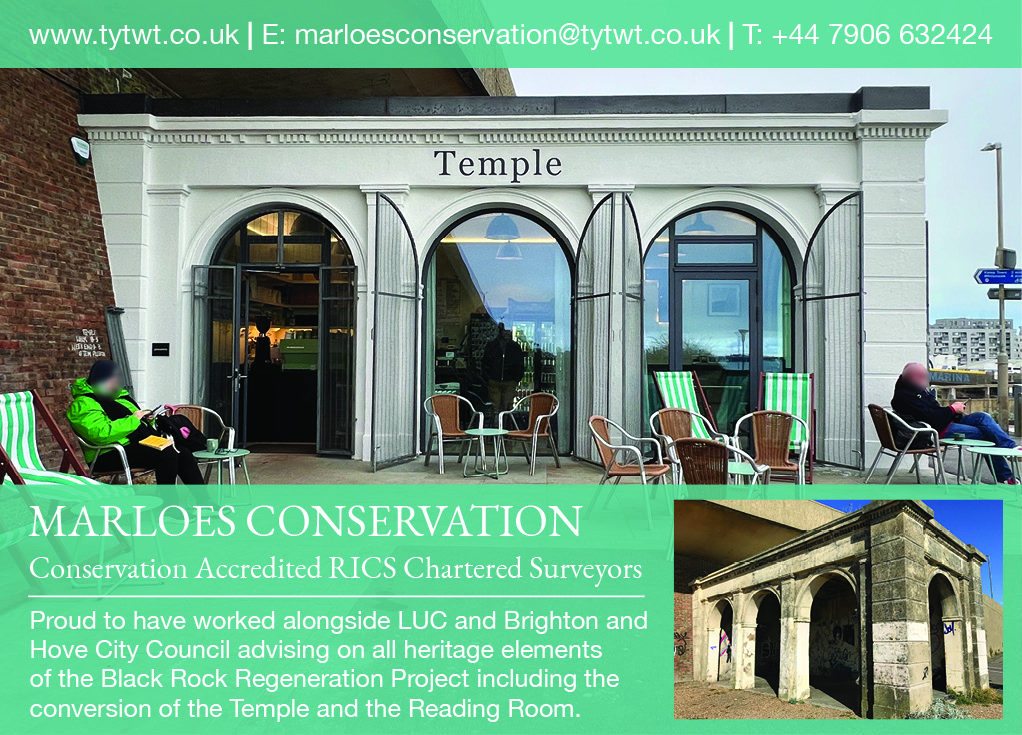
Heritage has been woven carefully into the regeneration story with Marloes Conservation involved from the initial Heritage Impact Assessment to advising on the detailed conversion of the Reading Room and the Temple. This included matching the historic mortars, plasters and paints, and ensuring that the contemporary design and installation of the glazing enhanced the historic character of the buildings and their wider setting.
Claire Deacon from Marloes Conservation commented: “The project was a fantastic opportunity for us to re-purpose the original buildings, which had become neglected, and encourage people to experience and use them again, and to visually reunify them with the cliff top terraces – that is what building conservation is all about and that is what we do best.”
The long-abandoned Grade II listed Reading Room has now been restored and reactivated as a café and community hub, with its outdoor terraces boasting open views onto the beachfront.
The Black Rock scheme forms part of a broader vision to improve connections between the city centre and Brighton Marina, creating a greener, more inclusive eastern seafront. Crucially, it shows how coastal defence, biodiversity net gain and placemaking can operate together rather than in conflict.
In an era of climate pressure and habitat loss, Black Rock sets a compelling precedent. By combining ecological restoration, low-carbon construction and sensitive heritage renewal, LUC’s design demonstrates that regeneration need not erase the past or diminish the natural world. Instead, it can restore both — turning forgotten ground into a landscape that belongs equally to people and wildlife.