
Bridgwater Tidal Barrier Scheme
The Bridgwater Tidal Barrier Scheme is one of the largest and most significant flood defence projects currently under construction in the UK. Delivered in partnership by the Environment Agency and Somerset Council, the scheme will provide long-term flood risk reduction from tidal flooding to around 11,300 homes, 1,500 businesses and critical infrastructure across Bridgwater and the surrounding area.
Located on the River Parrett estuary, approximately 17 kilometres upstream of the Severn Estuary, Bridgwater faces increasing flood risk from rising sea levels and more frequent extreme weather events. The scheme has been developed to address these challenges while supporting economic growth, environmental enhancement and community resilience.
At the heart of the project is a new tidal barrier on the River Parrett, supported by a network of primary and secondary downstream flood defences at Chilton Trinity, Pawlett and Combwich, together with improvements to fish and eel passage at locations across the Rivers Parrett and Tone. Together, these elements will operate as a single integrated flood defence system designed to protect the area well into the future.
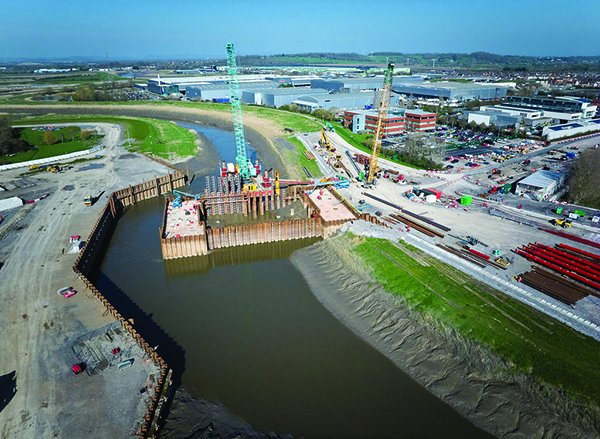
Since the project has started, construction has reached several significant milestones. At the tidal barrier site, construction of the temporary bypass channeland completion of the central cofferdam piling have enabled the safe diversion of the River Parrett, creating the conditions required for the next phase of construction.
Progress is also being made across the downstream defences. At Chilton Trinity, installation of the piling mat and seepage cut-off wall has been completed, creating a stable working platform and strengthening the integrity of future flood defences. At Pawlett, excavation of a borrow pit is underway, providing material for new embankments while reducing the need to import aggregate. At Combwich, work has resumed on primary and secondary embankments alongside the installation of permanent culverts.
Innovation has played a key role throughout the project. Digital engineering tools, including Building Information Modelling (BIM), have helped improve collaboration across more than 35 technical disciplines while enabling real-time carbon assessment and more efficient design development. These approaches have contributed to a 53% reduction in embodied carbon compared with earlier design options.
This innovative approach was recently recognised at the Flood & Coast Excellence Awards 2026, where AtkinsRéalis and the wider project team received the Digital Excellence Award for their work during the scheme’s detailed design phase.
Sustainability is embedded throughout delivery. Low-carbon concrete, recycled steel and off-site construction techniques are being used to reduce emissions, while excavated materials are being reused wherever possible. Borrow pits created during construction will ultimately be transformed into wetland habitats, delivering approximately four hectares of new biodiversity and strengthening ecological connections between the Somerset Levels and Moors and the Severn Estuary.
Extensive ecological monitoring and mitigation measures are being implemented throughout construction to protect protected species and sensitive habitats, while improvements to fish and eel passage will help support healthy migratory populations for decades to come.
The scheme is also revealing important insights into the area’s rich heritage. Archaeological investigations have uncovered evidence spanning Iron Age, Roman, medieval and industrial periods, including the remains of Victorian brickworks that highlight Bridgwater’s historic relationship with the River Parrett and its role in regional trade.
As construction progresses, the Bridgwater Tidal Barrier Scheme continues to demonstrate how major infrastructure can successfully combine engineering excellence, environmental enhancement and climate resilience.
Work is expected to continue for a further five to six years, encompassing the completion of construction, transition to operational readiness, and extensive landscaping and habitat creation across the scheme. Once complete, it will provide long-term protection for communities, businesses and critical infrastructure, helping to build a more resilient future for Bridgwater and Somerset.