
The Zeiterion Theatre New Bedford
The historic Zeiterion Theatre, a landmark entertainment venue in downtown New Bedford, has completed a transformative $37 million renovation that reimagines the property as a contemporary hospitality and cultural destination centred around audience experience, flexibility, and community engagement.
Led by Boston-based Wilson Butler Architects, the six-year transformation combines historic restoration with hospitality-driven planning, introducing new social spaces, premium patron amenities, flexible event environments, and enhanced accessibility throughout the building.
Originally envisioned as a modest modernization effort, the project evolved into a complete repositioning of the theatre experience, expanding the venue’s ability to support social gathering, food and beverage service, education, private events, and community programming alongside live performance.
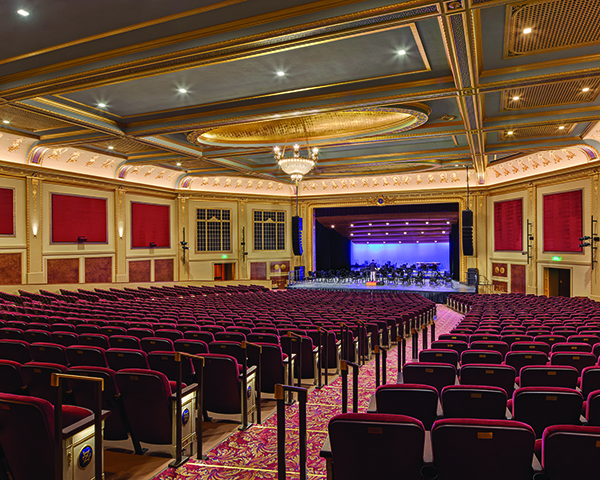
Rather than expanding outward, the design team focused on unlocking underused areas within the existing footprint to create new revenue-generating and community-oriented spaces while preserving the theatre’s historic character. The revitalized Zeiterion now operates as a multi-venue entertainment destination with five distinct spaces designed to support activity throughout the day and evening. The project also carefully restored the theatre’s historic auditorium and decorative interior finishes while modernizing infrastructure, theatrical systems, accessibility, circulation, and patron comfort.
“Theatre going today is about more than the performance itself,” said Rebecca Durante, NCIDQ, IIDA, LEED AP and lead interior designer for the project. “People are looking for memorable shared experiences, spaces to gather before and after events, and environments that feel welcoming, social, and connected to the community and location.”
As part of the project team, Stages Consultants led the theatre planning, acoustics and AV systems design from the outset of the project. Working closely with the wider design team, they helped shape the venue’s programme and identified opportunities to repurpose existing spaces for education, offices and a second performance venue, all without expanding the building’s footprint.
They also developed a new seating layout that increased audience capacity while improving sightlines and accessibility throughout the auditorium.
Throughout the project, the team carefully balanced the need to modernise the theatre with respect for its heritage. One example is the new lighting cove: rather than attaching a contemporary structure to the historic ceiling, part of the ceiling plane was subtly folded back to conceal a new catwalk. The intervention is integrated into the architecture, preserving the character of the original interior while delivering the technical upgrades required for a modern performance venue.
Alec Stoll, ASTC from Stages, said: “Historic theatres are exactly the kind of projects we love. There’s something incredibly rewarding about modernizing these buildings while preserving the character and history that make them so special.
“These theatres are often the heart of their communities—they’re living rooms—and being part of their renewal is a privilege that never gets old. I also grew up on Martha’s Vineyard, just a short ferry ride from New Bedford, so having the opportunity to work so close to home made this project especially meaningful.”
“The best projects are about more than the finished building,” Stoll continued. “They’re the ones where the relationships you build last well beyond the final punch list. This was one of those projects. It checked every box for us.”
As lead interior designer, Durante, along with the design team and client, developed an analogous palette of colours beginning first and foremost with the history of the building, drawing inspiration from the vibrant energy the arts organization brings to its community, and the strong coastal tie of New Bedford. A 1926 news article provided direction for the historic lobby and auditorium to feature “ivory, gold and old rose,” and with a modern interpretation of a deep fuchsia-hued rose, the space was imbued with richness in velvet acoustical fabric, lush mohair upholstery, and soft Axminster carpet.
Angular lines were used throughout the new design, drawing inspiration from the dynamic and energetic lines of ‘Z,’ and the spirited and tenacious nature of the non-profit organization and its staff. Herringbone tile patterns on floors and walls, custom zigzag metal grilles, angular tiles and patterns and details of decorative light fixtures all capture the energy and excitement this organization and live entertainment bring to the community.
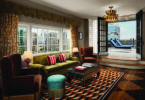
Within less historically significant areas of the building including the basement, the design team ventured towards bright reddish-pink LED neon-style lighting featuring a modern, bold ‘Z’ as a design element. The Speakeasy space embraces the found, industrial feel that a 1926 basement imbues, while modernized black and deep brass lighting features, black and white angular patterned tile, and rustic wood features make the space lively and inviting. Offering a variety of event style options, the Second Floor Lounge, feels dressed up in comparison, with bevelled edge antique mirror glass tile, and rich wood millwork with brass inlays that adorn the front of the bar and wainscot beneath the windows. The colour palette shifts towards a deep blue-green inspired by the Atlantic, showcased in velvet drapery and plush Axminster carpet.
Beyond its architectural transformation, the Zeiterion continues to serve as an important economic and tourism driver for the region. The theatre attracts more than 100,000 patrons annually and generates an estimated $12 million in economic impact for New Bedford through visitor spending, dining, tourism, and local business activity.
The renovation reflects broader trends across the hospitality and entertainment industries, where cultural programming, immersive environments, and experience-driven destinations are increasingly becoming key economic and tourism drivers.
“This project reflects a growing understanding that arts and entertainment venues are also hospitality environments,” said Durante. “People remember how a place makes them feel. The architecture, social spaces, accessibility, comfort, and atmosphere all contribute to the overall experience.”