
Shire Brook Valley Nature Reserve
After two years, the major nature recovery project at Shire Brook Valley Nature Reserve has completed, improving more than £1million worth of habitats across over 400 acres of green and blue spaces in the southeast of Sheffield.
Beginning in April 2024, the project was designed to deliver support for native mammals, reptiles, amphibians, and birds. Funding was secured by Sheffield City Council through the Government’s Species Survival Fund, which aims to enhance a network of natural habitats in order to help the decline in species abundance.
From that funding, Sheffield City Council was able to launch a Community Grants Scheme in partnership with the Local Area Committee to empower local groups to take action on the nature and climate emergency. £15,000 in capital funding and £5,000 in revenue funding was allocated to help support the nature recovery project.
Partners including Sheffield Hallam University, Sheffield and Rotherham Wildlife Trust, Woodhouse and District Community Forum and the South Yorkshire Sustainability Centre helped to deliver the project. However, at the heart of the project were the active volunteers who contributed at least 6,989.5 hours of time in order to complete the project.
Councillor Kurtis Crossthorn, Chair of the Communities, Parks and Leisure Committee at Sheffield City Council commented: “This project has delivered a remarkable transformation for Shire Brook Valley. Thanks to the dedication of our teams, partners and volunteers, we’ve created habitats where wildlife can thrive, strengthened natural flood defences and opened up new ways for people to explore and enjoy the reserves and green spaces.
“The scale of improvement achieved over just two years is exceptional, and we are extremely proud of the legacy this project leaves for nature, climate resilience and the local community.”
One of the projects key successes was the significant strengthening of the valley’s natural resilience to climate-driven flooding. Improved waterways, restored wetlands and new nature-based features has dramatically helped slow the flow of water, increase natural storage and create cleaner, more stable habitats for wetland wildlife.
Some of the improvements include the creation or restoration of 35 leaky dams, 7 ponds and, 6 scrapes that reduce flash‑flood impacts alongside the introduction and enhancement of 1,142m meters of ditches that help improve drainage and wetland connectivity. Each measure has played a crucial role in climate adaptation and long-term ecological recovery at the valley.
To support wildlife throughout the year, the project included undertaking traditional conservation practices to establish varied landscapes. Hedgelaying and coppicing are some of the practices utilised alongside extensive planting and meadow restoration and management through grazing.
Since the project, Shire Brook Valley has had a significant increase in native species, including harvest mice whose nest population at Woodhouse Washlands dramatically increased from 40 in 2022 to 215 in 2025.
Those increasers are down to the many new homes and safer environments created throughout the project. One example is the Swifts’, a remarkable bird that spends nine months of the year in flight, new safe nesting sites.
Over the last 30 years the population of Swifts decreased by 66%, which is partially due to modern insulation and building practices blocking where they traditionally nest. Delivered by the Sheffield Swift Network, the project saw Swift bricks, a durable, unobtrusive solution that mimics natural crevices in buildings, installed across the buildings that surround the valley.
Ann Ellis, Member of the Sheffield Swift Network expressed: “Thanks to the funding Sheffield Swift Network have been able to work with local residents and install 61 new swift bricks in homes across Hackenthorpe and Woodhouse. These permanent nesting sites offer Swifts a chance to return and breed, helping to secure a future for the species locally.”
Many other species are already benefitting from the 110 habitat features installed throughout the project, such as amphibians, hedgehogs, badgers, bats, and kingfishers.
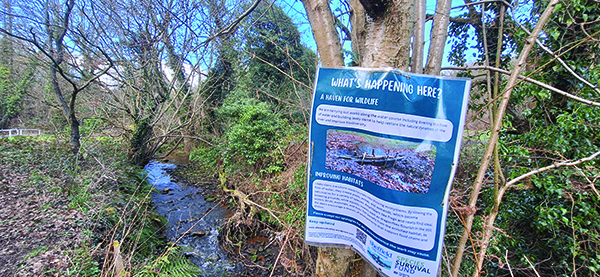
In order for the Shire Brook Valley Nature Reserve to be accessible for visitors, new trails, signage and interpretations were also introduced. Alongside this, schools, families. and visitors were invited to take part in a wide range of activities that introduce a connection to nature while educating about local wildlife.
Thus far, the project has accomplished significant results in improving wildlife, climate resilience and should continue to do so as species grow in population and more habitats form. Shire Brook Valley Nature Reserve’s restoration project has set a precedent for what can be achieved by hands-on conservation work.