

by Ollie Shepherd, Head of Product and Merchandising, Sweetshop.
While shoppers head back to chains like PRIMARK following the lockdown, analysts might summarise this behaviour and infer that consumers are looking for ‘value’.
Customers have been conditioned by these big chains to expect keen prices, ‘more for your money’, ‘entire new wardrobes’, in turn redefining what value means.
Yet being lighter on the bank balance doesn’t necessarily confer value. These low prices always come at a cost, and in regards to fashion, the true price if often paid within production techniques and the supply chain.
The former is to a large degree visible to the customer in the form of fabrication and construction, the shopper can make their own assessments on these elements. In the case of PRIMARK it seems that price wins. Products go into baskets, one of many making up the ‘larger units per transaction’ the chain is reporting.
More for less seems to be the customer mind set, but this is certainly not value, products built on the fast-fashion business model often have very short lifespans in the real world. Busted zips/broken seams/fraying hems, all likely outcomes of moderate use largely due to the speed items are run down the production line.
Pair a broken garment with a low initial investment from the customer, and they are less likely to repair or mend an item of clothing. This is ok though, the customer can head back to store and rebuy this week’s similar version of, in turn this shopper now becoming a member of the disposable fashion cohort.
But it’s 2020 and disposable is NOT on trend and does NOT feel like good value, and this is before the supply chain is considered.
The cost of material, labour and shipping (only a few components of the production process) should add up to a higher price than what’s on the ticket, and cannot be accounted for solely on faster production methods.
This means the supply chain, farming, factories, or freight is being squeezed financially.
These elements are invisible to the end consumer, and being so far removed means there is a lack of emotional investment into the decision making process. Even broad terms like ‘improving supply chain’ can be used by companies to disguise the human element, a sort of soft admittance that standards were not high enough or perhaps previously even exploitive.
With such opaqueness for the end consumer it’s easy for us to forget that it’s quite possibly a small family business weaving, stitching and sewing components of the end garment and likely their pockets are being squeezed.
The assessment here in a nutshell is that ‘Value’ is not an outcome of expenditure of lack thereof. It also doesn’t mean that spending more guarantees good value. This does bring the question: What does define value?
Value is an amalgamation of the entire customer experience when exchanging cash for goods.
This experience is driven by purpose or story and has started long before goods are on shelves. Defined by creators of the products and brands, identifying a strong purpose early on and ensuring communication through the customer journey is important.
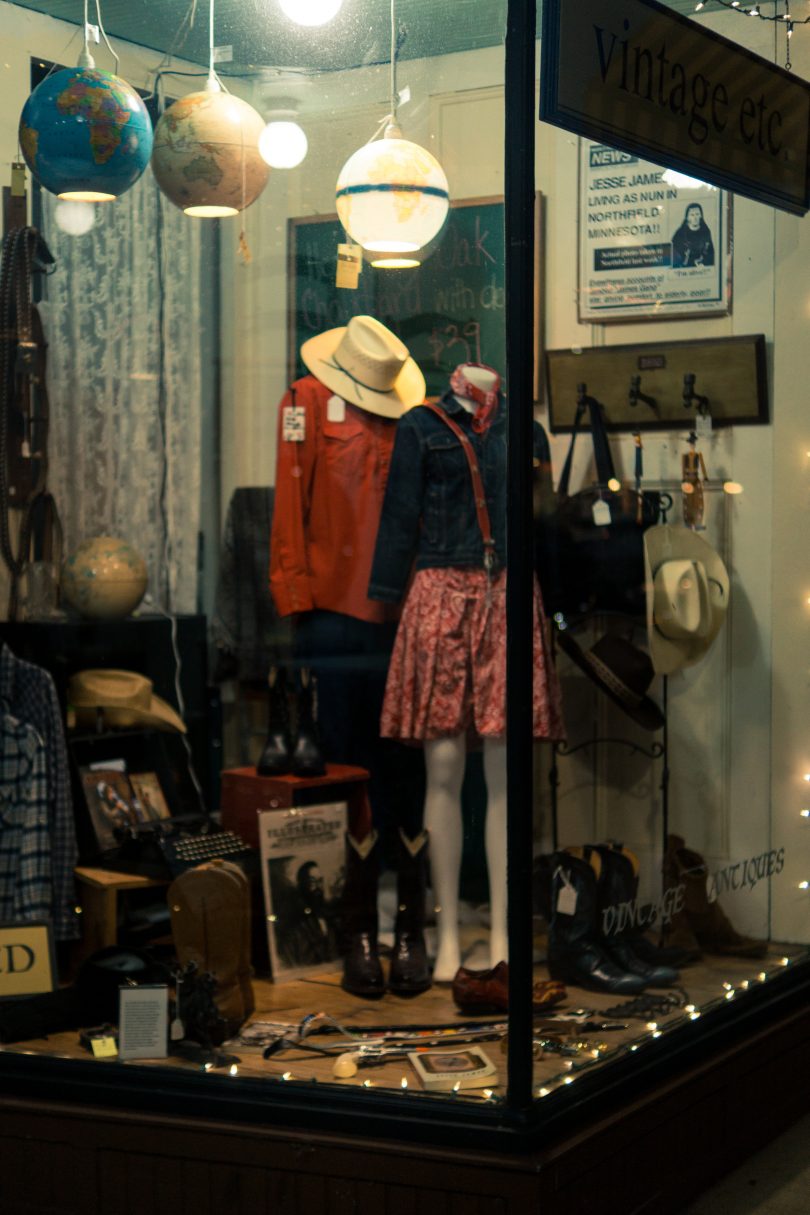
However, for the customer, in a bricks and mortar setting, it can begin in the presentation of the shop window, shelf or rail.
Strong visual merchandising is a key component of storytelling and will draw a customer to a product to begin and build an emotional journey. Value is added when store staff bring knowledge about the product, not pushing a hard sell but instead relaying the message and purpose, this adds confidence into the customers’ decision making.
These examples of a slick front of house operation are long lasting for the customer. This positive experience will cement confidence and lead to describing such experiences to friends and family, even passing on the story telling and purpose of a product. THIS IS WHAT GOOD VALUE LOOKS LIKE, or at least one example is of. This of course doesn’t consider the fact we live now with our eyes on a screen and the digital world has an ever growing sway on our emotional connection, or interpretation of ‘value’, to physical products.
More clicks, more likes, more swipes are high social currency in the digital era and a trade off on price, quality and customer experience can mean more looks, more fits, more content.
It should only be fair then that we are privy to more information, more transparency, more visibility on the journey products have gone through to land in store with shiny five pounds price tickets. Only then can consumers make a conscious and informed choice on what they feel is good value.






