
Author: Giles Fuchs, Owner of Burgh Island Hotel
With the Government’s roadmap towards reopening the economy unveiling a continued closure of hotels and B&Bs until 17th May at the earliest, many hospitality businesses may be considering how best to invest their resources to ensure they care for both staff and communities in the months remaining before lockdown restrictions are lifted.
Indeed, members of the hospitality sector would be wise to consider this question carefully, as they face the prospect of further hardship this Spring. Another extended period of low revenues and lack of brand-building business poses an immense challenge to hotels, yet they should also consider the non-financial pressure placed on staff and communities who will play a key role in post-pandemic recovery. This means looking out for both employees and would-be guest, as well as strengthening ties to the local area and the natural environment, all of which will help future-proof hospitality businesses.
Maintaining luxury in crisis
Keeping in touch with would-be guests throughout the prolonged period of closure could represent a masterstroke of brand-building which benefits both parties. Last year’s first lockdown cost the hospitality sector some £30bn in lost revenues, with an 87% fall in sales in Q2 2020 partly prompted by the loss of Easter trading. Now, with further lockdowns testing everyone’s fondness for home comforts, hotels can capitalise by keeping those channels of communication open.
Moreover, if there is one thing we have learned through lockdown, it is how to move communication into the digital space. Therefore, while big-budgeted hotels such as the Berkley have been busy delivering room service to doorsteps, other businesses can make an equally significant impact with virtual tours and workshops, and even social media campaigns. All this will help build anticipation among guests desperate to revisit their favourite destinations.
Supporting the local community
While the Government’s roadmap prompted an outpouring of mixed emotions, influential and well-resourced hotels are ideally positioned to inject genuine positivity into their local areas. Burgh Island’s expert hotelier company, Inntelligence, for example, masterminded the ‘Hospitality Positivity’ fundraising campaign to raise spirits as well as money to help hospitality workers who were struggling through the festive period just gone.
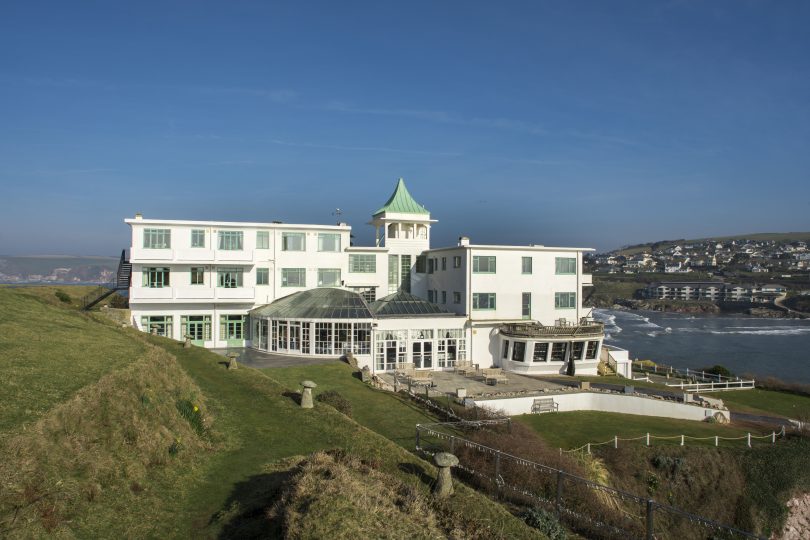
Furthermore, hotels can reinforce their relationships with surrounding areas by prioritising locally sourced produce. At Burgh Island, for instance, Executive Chef Tim Hall is proud to infuse his menus with a genuine taste of nearby environs and has been cultivating relationships with local suppliers to this end for more than a decade. As a result, 80% of his ingredients are sourced within a 30-mileradius of the island. Not only does this approach yield fantastic food, but it also ensures that hotels are intimately integrated into the communities in which they are situated.
Emphasising sustainability
An additional benefit of using locally sourced produce is, of course, its relatively minor impact on the environment. With travel restrictions and increasing environmental concerns making staycations more popular than ever, hotels have an opportunity to focus on a more domestic audience – but only if they display the same sensitivity to sustainability that is growing in importance among guests.
Environmentally conscious hotels can align themselves with the all-important sustainability agenda by embracing clean energy. Be it solar, wind, or even tidal power, playing to the strengths of a hotel’s unique environment will be critical to enhancing their brand appeal post-pandemic. At Burgh Island, for example, the old disused tennis court has been converted into a state-of-the-art solar array, while the hotel works with the Carbon Trust to streamline its energy needs. Recognition from organisations such as this are invaluable, and Burgh Island is proud to have achieved accreditation from both the Green Tourism Movement and the Green Apple Organisation for Conservation.
And it is not difficult to see why. From the weather station on the hotel roof which feeds data to reception for guests to review, to the construction of a polytunnel for growing native seedlings and herbs, Burgh Island is harnessing the latest tech to integrate more harmoniously with its natural environment – and rightly so. After all, the natural beauty of many staycation destinations is the foundation of their popularity.
Taking care of staff
Hotels should prioritise workers’ wellbeing, ensuring they are supported emotionally as well as financially as far as possible. Even before the pandemic, more than three million UK adults suffered from both poor mental health and financial difficulties, reflecting the capacity of each problem to exacerbate the other. And with hotel staff having to shoulder the psychological impact of having their jobs paused, it is no wonder they have been particularly affected by the mental health crisis precipitated by Covid-19.
Financial support, therefore, can only be part of the solution. With 24% of UK adults having suffered from loneliness in the pandemic, hotels should reinforce the sense of community which makes them such popular places to work. It is no coincidence that businesses such as Burgh Island, which places community at its heart, have been among the most successful at preserving staff wellbeing through the pandemic. For the last 18 months, staff have been able to access a helpline should they require support, and we are committed to ensuring that support remains in place longer after the pandemic. We have all been strengthened by our ethos of being a ‘family’ business, albeit not in the traditional sense.
Pivoting roadmap resources
There is cause for cautious optimism as we hopefully near the end of the Covid-19 crisis, as a gradually improving situation would yield new opportunities for hospitality businesses to kickstart their post-pandemic life. Hotels can maintain brand awareness by keeping in touch with guests and staying connected to local communities. Moreover, by embracing guests’ appetite for sustainability and providing the support staff sometimes need, they can position themselves for a strong post-pandemic recovery. As we edge ever closer to the lifting of restrictions, therefore, the future indeed looks bright.