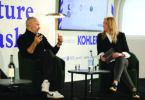
by chef Nathan Snoddon, owner of Food Story Media: https://www.foodstorymedia.com/
One powerful principle to remember here is that information is consumed, stories are experienced. Traditional marketing is like that favourite scratched CD we all had and couldn’t let go of.
Selling is predominately done by telling them what it is, what it does, and how it does it, but storytelling’s sole focus is on sharing the ‘why’ behind it. Let me ask a question; when you go to eat at a Michelin-starred restaurant, do you go just because you’re hungry and they sell food? Or do you go because of how it makes you feel when you are there? Don’t get me wrong, I am sure you are hungry too, but as a result of deciding that you will go there for the experience, the hunger is secondary. Otherwise, you would eat at home or Burger King.
Maybe it’s how special the staff treat you or the way they serve the canapé; perhaps it’s the excitement of knowing you’ll always get something new or how the sommelier always picks the perfect pairing without having to remortgage your house, maybe it’s the way they age the meat to achieve the ideal flavour or the way they remember your name. When we take a global view, it’s not about any one thing; it’s about the emotion created at that moment due to the action. As Maya Angelo said, “people will forget what you said, people will forget what you did, but people will never forget how you made them feel.”
There are three stages to getting your story straight;
Decide it
What is your story? We all have one even if you might not realise it yet.
There is one fundamental question to hollow out your stories backbone; “WHY”? Why do you do the ‘what’ that you offer? Follow this up with continuing the “what else?” question until you have peeled back multiple layers.
Design it
Great brand stories have three key distinctions;
The problem;
What obstacles have you identified? What’s missing?
The exploration;
What challenges and learning have you grown through to understand your consumer better?
The solution;
What empowering experience do you offer to those faced with this problem?
What does that look, sound and feel like? Use words, images and music to become absorbed in it and showcase the story you now have clarity on with your team. This process alone will form enormous progress when you implement it into your strategy with intensity.
Deliver it
Before you speak, you must get clarity on whom you are talking to. Eskimos don’t buy snow, so to be sure you won’t fail like a polystyrene anchor, take a moment to identify your key audience that will resonate with your message. Traditionally they called this a demographic; I believe it goes much deeper than this in today’s world and requires developing what I call archetypes which goes further into human psychology. Archetypes not only identify the basics of age, gender, profession but also what type of person they are. What do they do in their free time, are they introverted or extroverted, where do they spend their time online, is it Facebook groups or blogs, and then which? Are they towards or away from people. Everyone is either moving away from a problem or towards solutions, which would define the most welcoming message. These are just a few more profound questions that will begin to shape your ideal archetypes to give you direct access to the audience you can serve best.
Now armed with these fresh ideas, you’ll start to ponder and create new neurological connections to why you do what you do, in turn giving you the momentum to go out and share your story with impact.
Whatever it is you do, do it with purpose and stay extraordinary.
N