
By Giles Fuchs, Owner of Burgh Island Hotel

Covid cases are once again proliferating throughout the UK and the latest estimates expect the hospitality sector to lose as much as £4bn as a result of the omicron variant. But all is not lost.
Omicron is just the latest in a string of setbacks that date back to the beginning of the pandemic, but while the last two years have been the most challenging the sector has ever experienced, UK hospitality has not yet given in.
Resilient businesses will withstand the latest wave of the virus, just as they remain on top of the latest changes in consumer behaviour. With restrictions and reticence changing people’s travel habits, for instance, hotels will have to find new ways of appealing to new national and even local audiences. Moreover, rebuilding the sector after the ravages of the pandemic will mean restoring the trust that many current, former, and future hospitality staff will need to work in the industry in the long term.
Tackling “HOGO”
Hospitality businesses are turning to new initiatives to attract guests amid the spread of “HOGO”, an emerging trend that threatens to prolong the challenges posed by Covid.
HOGO, or the “Hassle Of Going Out”, is essentially the opposite of the “FOMO” that many businesses might have hoped would fuel a surge in post-lockdown custom from cooped-up consumers. Instead, the last pre-omicron weeks of 2021 brought the new challenge of guests failing to turn up for prebooked hospitality events.
Of course, the challenge itself is not new, but the scale is – to use an unpopular term – unprecedented. According to some research, 15% of all bookings were falling victims to the epidemic of no-shows driven by HOGO towards the end of last year.[1] And while we are now closer to the end of the omicron wave and despite travel within England remaining unrestricted, the economic impact of HOGO could cast a long shadow.
However, hospitality businesses have been quick to respond with solutions to this problem. Some, for instance, now allow day-trippers to book local hotel facilities without making overnight stays a mandatory part of the experience.[2] Offering “daycations” prioritises comfort and convenience for guests, alleviating the hassle of going out – and even supplying this new trend with a catchy term to rival “HOGO”.
Hotels can therefore boost revenues even while guests understandably shy away from more ambitious getaways, with anxieties about Covid likely to linger beyond the spread of the virus itself. And given how much revenue has been lost since the start of the pandemic, these innovative initiatives cannot themselves spread too soon.
Sustaining momentum…Providing escapism
Hotels cannot put the pandemic behind them just yet, with the latest data showing that sales were still 10% short of pre-pandemic levels at the end of 2021.[3] However, they can still help guests to escape, even just for a weekend.
Summer 2021 saw a much needed “staycation boom” in the UK, and as cases of Covid-fatigue climb almost as fast as omicron, hotels will have further opportunities to provide guests with the physical and mental getaways that they will continue to crave in the long term. Serving them the zenith of luxury, for instance, or taking them back in time, can remind guests that the most magical experiences can even be found on their doorstep.
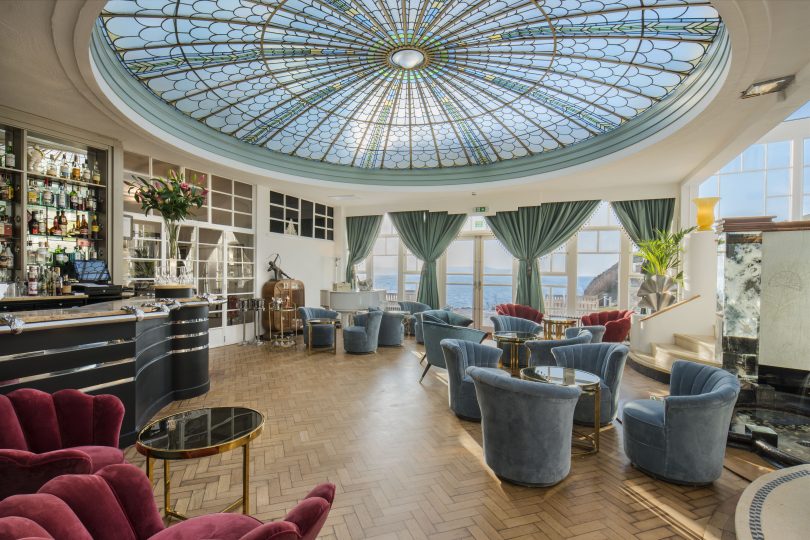
Burgh Island Hotel delivers on both of these criteria, immersing guests in the glamour of its Roaring Twenties heyday in every aspect from the fabulous food to the art deco décor. Guests can party like it’s 1929 with a cocktail in the palatial Palm Court or an eight-course black tie experience in the Grand Ballroom – and all this on a private island that grants them a genuine escape.
Having steered itself successfully through the pandemic thus far and armed with a sound strategy for retaining customer interest, Burgh Island is already more than 80% booked up for the first half of this year, so the outlook for the hotel and for hospitality as a whole remains positive as we face the future.
Each hotel will have to lean into whatever makes it unique, whether it be geographical surroundings or historical setting. But there is one universal truth: when aiming for a robust recovery, investment in people is paramount.
Investing in people
While raising pay is the obvious way to resolve the staff shortages across the sector, improving the esteem of hospitality roles is equally important and arguably more beneficial for the industry in the long term.
More than two million people work in hospitality in the UK, but how many of those would describe their job as a genuine career? Few have probably been involved in “succession planning”, where potential leaders are identified and supported to develop so they can move into senior positions. Giving recruits a clear career roadmap will help make them more optimistic about their role in the sector as a whole.
Similarly, businesses should prioritise Continuing Professional Development (CPD) to help workers learn the skills that most interest them. At Burgh Island, for instance, we have been guiding staff in sustainability practices so they can help minimise the hotel’s carbon footprint.
Investment in people will be integral to the revival of UK hospitality in 2022. It is also vital that hotels remind guests of what they have been missing for much of the last two years, and of why the Hassle Of Going Out is so worth it.
Encouragingly, hotels have already proven their adaptability, and many remain in a strong position to repeat this feat in the year ahead. That is why I am still optimistic about the hospitality sector in 2022.
[1] https://inews.co.uk/news/hogo-hassle-going-out-replaces-fomo-restaurants-suffer-widespread-no-shows-1312318
[2] Ibid
[3] https://www.standard.co.uk/business/uk-hospitality-warns-industry-in-peril-sales-still-short-of-2019-levels-b965940.html