
Written By Giles Fuchs, Owner of Burgh Island Hotel
With the holiday season upon us, scores of holidaymakers are undoubtedly now scrolling through Airbnb’s endless supply of short-term rentals hoping to find the perfect home away from home.
Many of these Instagram-worthy properties certainly have their charm, but they’ve also earned a reputation among locals as a blight on Britain’s most picturesque landscapes. With Airbnbs having flooded the British coast, many residents — and hoteliers too — are feeling the effects of the short-term rental’s rise. Evidently, hospitality needs freshening up, but to protect the communities we rely so heavily upon, the traditional hotel establishment must find a balance that serves the needs of both guests and locals.
Holiday lets are letting locals down
Experiential travellers, hoping to live like locals, are happily booking up Airbnb’s ample supply of properties. It’s understandable, given the freedom and privacy a private property rental provides, which is one of the most common reasons visitors choose to book this form of accommodation.
However, their popularity is slowly changing the social and economic landscape of popular tourist areas. A study on the effects of short-term rentals in Madrid, Spain, concluded that the rise in the number of holiday lets has displaced both the local population and resident-oriented businesses.[1] The UK’s tourist hotspots have been hit by a similar wave over the last decade. With landlords flocking to British beaches like seagulls that have caught a whiff of fresh fish, the number of Airbnb-type properties for rent in coastal spots in England and Wales increased by 56% between 2019 and 2022. In the parish of Mortehoe in North Devon, 47% of all rental properties are now holiday lets or second homes.
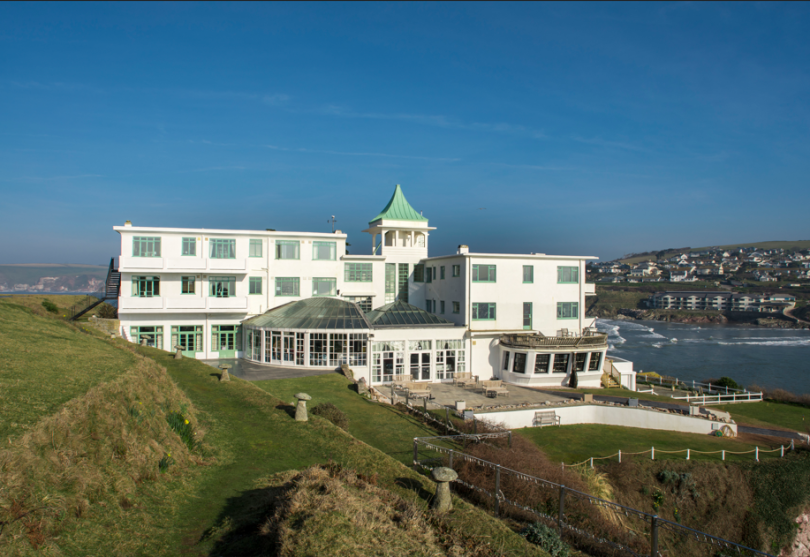
Housing prices have risen in tandem in these areas.[2] The value of high-end property in coastal areas has grown by an average of 16%,[3] with the Southwest coast among the most impacted. Outpriced by wealthy landlords, residents are being forced out of areas they have long called home. They take with them the area’s charm, community, and culture. It’s these that get guests through the door, so hotels must take great care to ensure our offerings preserve local industries, traditions, and businesses. At Burgh Island, we source 80% of ingredients used in our kitchens from farms within a 30-mile radius of the hotel, partner with resident artists, and provide guests with an easy passage between our tidal island and the mainland to ensure our guests can access local life without turning to Airbnb.
The knock-on effect of inaction
A surplus of short-term holiday lets may bring plenty of visitors to an area’s shores during the summer, but what are businesses to do during the rest of the year? Decreasing numbers of permanent residents in certain areas means there is a less consistent stream of regular customers, and the availability of staff is low. Seasonal tourist businesses can prepare for this eventuality by closing for several months. However, pharmacists, supermarkets, and family-owned hospitality establishments are not so lucky, and many are struggling to stay commercially viable throughout the year.
As hoteliers, we are experts in entertaining guests no matter the weather and we must put those skills to good to end our rural communities’ reliance on the sun. For instance, there is no better time than a gloomy Autumn evening to partake in one of Burgh Island’s regular murder mystery weekends, while events such as the Bigbury Net Zero environmentalist group ‘island assembly’ — hosted by our hotel — have also helped to bring new custom to the community in recent years.
At Burgh, we understand the role our local community plays in making the island such an attractive destination and always strive to ensure they are not left out. For instance, we welcome those who are not guests to join us for a rather splendid and unique afternoon tea served daily, with only 24-hour notice required for booking to allow us to prepare. By actively engaging with locals and providing communal spaces and events for all to come together, we hope to preserve Bigbury-on-Sea’s tight-knit community, while providing all the benefits of a bustling tourism industry.
Celebrating the local community
Tourism itself is by no means negative for local British communities. Providing jobs and economic growth to rural areas, it is, in fact, the opposite and has historically been welcomed by locals with open arms. In coastal areas, the tourism industry makes up an average of 15-20% of all employment, rising as high as 50% in destinations such as St Ives and Whitby.[4]
Understandably, financial growth for these areas is somewhat dependent on a steady stream of visitors, with tourism in Devon accounting for 5.7% of its economy’s Gross Value Added (GVA). Keeping holidaymakers interested is therefore paramount to preserving jobs and communities. At Burgh Island, for example, we consistently offer locals opportunities to join our family, be it on the hotel staffing team or on other parts of the island.
However, with the rise of short-term rentals having transformed many countryside havens into soulless ghost towns, it’s evident that areas cannot survive on hospitality alone. Only by celebrating an area’s history can hotels truly preserve it. Our iconic Pilchard Inn holds many nods to the famous 14th-century smuggler Tom Crocker, who used the pub as a home base. Historical tours built on local history such as this can be a great way to increase footfall into locally owned businesses, balancing tourists’ commercial wants with the needs of local communities.
Rebuilding the relationship between guests and locals
The industry has been a ray of sunshine for many rural communities for decades. The short-term rental has dampened that once outstanding relationship, but locals and tourism do not have to be at odds. In fact, at Burgh, we strive to support the community to the best of our ability, and work closely with locals to combat issues that affect them, such as waste and sustainability. We source ingredients locally to reduce logistics emissions, recycle everything that can be recycled, and rely heavily on green energy to protect the environment we share.
By offering an inroad to Britain’s tourist hotspots without tramping over the lives of residents, protecting communities and industries, and attracting a steady stream of guests year-round, hotels can earn glowing reviews from tourists and locals alike.
[1] https://academic.oup.com/cjres/advance-article-abstract/doi/10.1093/cjres/rsad009/7185640?redirectedFrom=fulltext
[2] https://www.theguardian.com/technology/2022/oct/18/sharp-rise-airbnb-listings-coastal-areas-england-wales
[3] https://www.dailymail.co.uk/property/article-11002075/House-price-growth-expensive-coastal-rural-areas-cools-says-Savills.html