
Written By Simon McKenzie, CEO at Hollywood Monster
The issue of plastic pollution has emerged as one of the most critical environmental challenges of our time. While significant strides have been made in reducing plastic waste across various sectors, the construction industry in the UK has experienced a troubling surge in plastic consumption.
It is important to point out here that plastic does have a place in construction when permanently installed for building projects. It is durable and long-lasting, making it an ideal building material. What is troubling is the excessive amount of avoidable plastic waste that generated.
Startling statistics released by the Department for Environment, Food and Rural Affairs (DEFRA) reveal that plastic waste output in the UK construction industry has surged by over 45% in the past two years alone. To make matters worse, the construction industry ranks second only to the packaging sector as the primary contributor to plastic waste production, accounting for a significant proportion of the 3.7 million tonnes that the UK sends to landfills or the ocean.
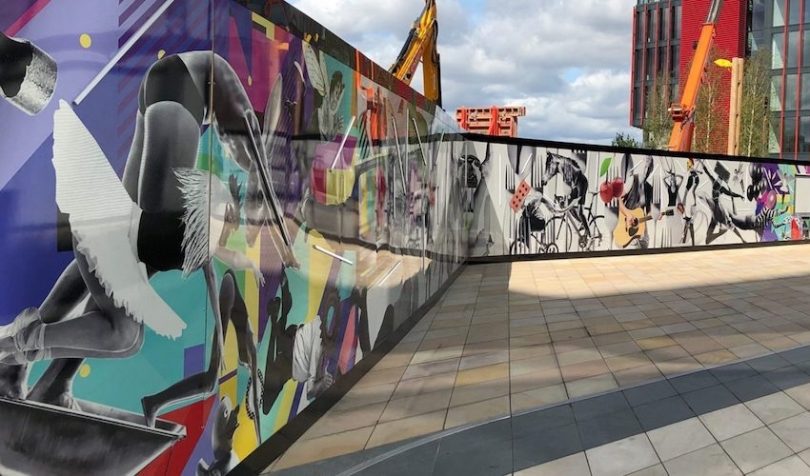
While there are various reasons why plastic waste poses a challenge to the sector, several causes are avoidable, and we can mitigate the issue through enhanced research and informed decision-making concerning sustainable alternatives. Common on-site products such as hoardings, banners, signage, building wraps, and totems often rely on the use of harmful PVC materials. However, viable sustainable and recyclable alternatives exist that can prevent these building materials from ending up in landfills.
So, what are these alternatives, and how do they compare to traditional plastic materials?
Promising Solutions: Paving the Path to Sustainability
Committing to the use of sustainable materials whenever possible not only reduces individual waste but also encourages others in the sector to embrace alternative materials that are both eco-friendly and functional.
Fortunately, numerous options are available that offer the same level of print quality and durability as traditional PVC fabrics. Water-based coated materials like Kavalan, for instance, excel in performance, delivering the same quality and customer experience as PVC banners. Kavalan is not only PVC-free and 100% clean, but it also closely resembles PVC in appearance, feel, and quality while remaining weldable. Moreover, it weighs 50% less than PVC, resulting in significantly reduced carbon emissions during transportation.
Embracing the principles of a circular economy, where single-use plastics are reused, repurposed, or recycled, can lessen reliance on such plastics and minimise waste generation. Innovative materials like UFabrik exemplify this concept, as they are manufactured from plastic bottles that undergo thorough cleaning, sorting, and shredding into flakes. These flakes are then transformed into pellets, which are melted into extruded fibres, spun into yarn, and ultimately used to create fully recycled fabric.
Collaboration: The Key to Tackling Plastic Waste
Addressing plastic waste in the construction industry necessitates collective action and a shift in how we approach building practices. Building professionals, policymakers, and manufacturers must acknowledge the environmental consequences of plastic usage and embrace innovative solutions that minimise or eliminate plastic waste throughout the construction process. One of the primary challenges lies in the lack of awareness within the sector regarding eco-friendly options and their quality.
While it’s understandable that contractors may be hesitant to try unfamiliar materials, companies like Morgan Sindall and Lovell have demonstrated that plastic-free materials are not only high-quality but also affordable and durable. By embracing these new eco-friendly materials, the industry can prevent a significant portion of the 98,284 tonnes of plastic it produces from ending up in landfills. Sustainable materials undergo rigorous testing before becoming widely available, and their durability is supported by numerous case studies.
For example, we have been working with McDonald’s for over 20 years and have transformed over 1000 of its restaurants across the UK and Ireland, replacing its interior and exterior graphics with sustainable materials. In the last 18 months, McDonalds has reduced its waste by an impressive 132.3 tonnes, just by swapping PVC print and signage for other environmentally friendly options.
To drive innovation and implement sustainable practices, the construction industry, including contractors, architects, and suppliers, must join forces. This requires fostering partnerships between industry stakeholders, sharing best practices, and collectively advocating for stricter regulations and incentives that discourage the use of plastic.
The vision is to make the entire process of creating, displaying, and disposing of signage materials environmentally friendly. This entails utilising single use plastics to produce sustainable materials and working collaboratively with customers to collectively recycle unwanted displays. As we continue to develop new formulas for our sustainable range, with enhanced weldability and strength, the print and signage industry enters an exciting new era. Our ultimate goal is to collaborate with the construction industry to eliminate the need for PVC altogether, driving us closer to a truly sustainable future.