

Written By Richard Saunders, Retail Agency Partner at Hartnell Taylor Cook
Demand for innovative retail hubs has grown in recent times: as the rising cost of living bites, retailers have been forced to think outside of the box to spur activity in a sector hit hard by economic uncertainty. As the need for in-store innovation grows, so too does the need to stay in line with what consumers want, and at the top of that list is a requirement for strong ESG credentials.
With present-day, well-informed consumers, demanding ethically and sustainably produced items, there is now an expectation for retailers (both big and small) to exude a genuine desire to promote a better, greener and cleaner society.
However, with the ESG agenda growing at pace and new regulation emerging, the current reality does not always match this ideal. Smaller retailers may lack the means of developing new models in the current landscape, and often, big-name brands motivated by profit margins pay little more than lip service to their ESG commitments. Ultimately, the proof lies in the pudding, and in order to engage with the modern consumer retailers must showcase their sincerity and commitment to the cause.
An example of a retailer leading the way is Finisterre, a Cornwall-based outdoor apparel and surfwear brand with sustainability built into its DNA. Since 2008, its Lived and Loved service has offered free in-store repairs for any products purchased– highlighting how a business can practically demonstrate its ESG commitments. Finisterre also works with Reskinned, a company who take surplus or used Finisterre stock and recondition them for re-sale. It is initiatives like these that bring sustainability commitments from words on a website to life.
However, for smaller, independent retailers who cannot easily establish services like these, forming successful partnerships may be easier said than done – especially if big name brands are targeted. Partnerships between already established brands are safer business decisions to make for large companies, as they already have the standing and credibility smaller and newer retailers lack. But this is not necessarily the way forward. Rather, bigger names should be working to boost the reach of smaller, ethical brands.
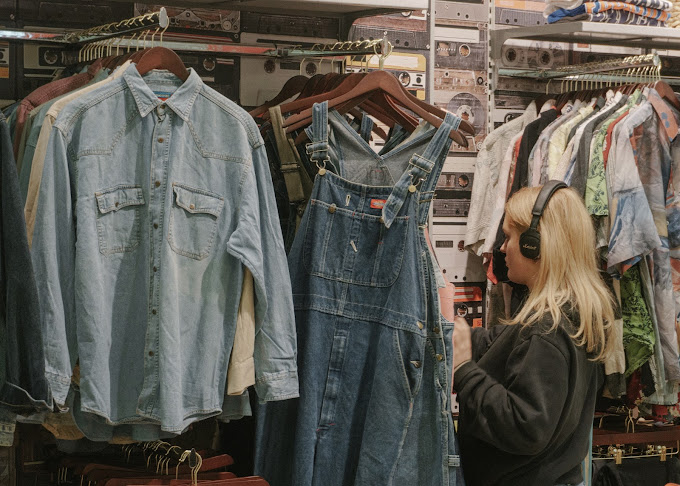
Take Primark, for example. While its previous forms of innovation have often revolved around having high-street staples (such as Costa and Greggs) in-store, its recent partnership with independent vintage clothing company, WornWell, demonstrates a shift in the times. Large retailers need to resonate with the modern consumer, and by working with a smaller brand to promote sustainability through second-hand or vintage clothing, Primark has shown the consumer that it is on its way. Although, admittedly, the retailer still has some way to go, this will likely be the next generation of retail – and if businesses fail to shift their in-store models and play their part in promoting smaller independents they will be left out of the next retail revolution.
So, what can smaller retailers do if partnering with bigger brands and in-store innovation is not a possibility? It should be remembered that forming lateral partnerships with retailers of a similar size can also act as an effective alternative to in-store innovation, and other tactics – such as limited edition launches and pop-up collaborations – can provide a short-term and lower cost alternative for retailers. Collaboration can truly make a difference to small retailers weathering the storm that is hitting the high street, and by championing small businesses and partnering with other emerging retailers, both parties can achieve growth together. Innovation is all about thinking outwardly rather than inwardly, creating opportunities with others and for others while still achieving our individual goals.






