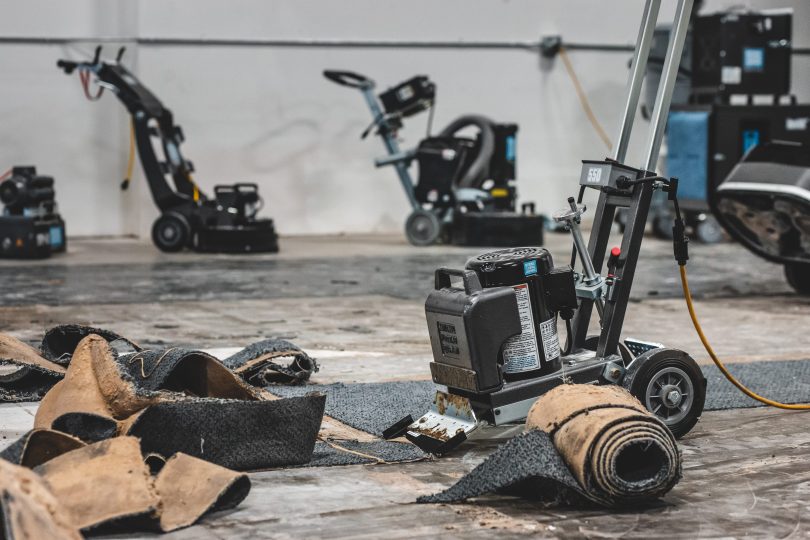

When preparing your car for a long journey, checking the tyre pressure, oil and windscreen wash is recommended to prevent unexpected breakdowns along the way. Taking the time to prepare is just as important when carrying out a surface preparation job, and getting your equipment ready is critical. Here Tom Dunn, Vice President of Sales at surface preparation expert National Flooring Equipment, explores three key areas to address so that contractors can set up their surface preparation equipment effectively.
Every surface and floor preparation job is different, so approaches to machine set up will inevitably differ. Whether contractors are preparing a floor in a warehouse or a shiny new car showroom, managing customer expectations is vital. This means knowing what the site owner or facility manager wants and identifying the equipment that will deliver the project on time and in budget.
Tooling
The correct tooling is just as important as the machine itself. After surveying the floor, contractors can select tooling based on the material that needs removing, the condition of the substrate underneath and the desired finish. A contractor could have around 20 different blades in their toolkit, so must take the time to select the right blade and set it at the best angle and pitch for the job in hand. Configuration is often down to trial and error and following this process can prevent ineffective scraping and the damage and delay that follows.
It’s important that contractors also select the right diamonds when using a planetary or counter-rotational grinder grind and polish harder surfaces. Diamond tooling options include hard, medium and soft bond — all designed for different materials and concrete hardness. For example, when grinding harder concrete, a softer diamond is recommended. Using the wrong diamonds at the wrong stage of surface preparation can be very expensive because it wears down the tooling faster and can result in scratches, which means starting again.
Power restrictions
Most contractors will work with single phase 110V, single phase 220V, and three phase 220V power sources when working on projects. Low-voltage single phase 110V is commonly found in residential homes and small businesses, and machines can simply run off a standard wall outlet. Meanwhile, higher voltages such as three phase 220V supplies larger buildings such as commercial and industrial facilities. If a contractor is using a 110V grinder in a residential building then it will function as intended, but these low-voltage sites are unable to support higher-rated equipment.
Using generators can help overcome supply limits, but careful consideration is needed when running any surface preparation equipment off them. It may be tempting to underspecify a generator set to limit costs, but this carries its own risks. Underspecifying a generator can lead to power spikes and other abnormalities, which can damage the machine and lead to downtime. Therefore, a steady input from a slightly larger generator is always more desirable and will help ensure continual power delivery.
Need for speed?
We all know the old saying: “Slow and steady wins the race”, and this is often true when operating surface preparation machinery. Sometimes, when polishing a floor for instance, selecting a medium-to-high speed can be more effective. However, when preparing a scraper for a removal project, slowing it down can help ensure contractors don’t inadvertently skip over certain areas.
It’s a common misconception among contractors that the faster they work, the faster the job is done. However, they must allow the diamonds, carbide chips and other tooling to do their job, which can mean running the equipment at a lower speed.
Just like getting a car ready for a long journey, it is important to set your surface preparation equipment up for success. This means carefully considering the customer expectations, while addressing any tooling, power restrictions or speed issues before bringing the equipment to site and starting it up.
Looking for advice on setting up your surface preparation equipment? Visit https://nationalequipmentdirect.com/.