
Written By Giles Fuchs, Owner at Burgh Island Hotel
Travel analysts are predicting that international tourist arrivals could reach 80-90% of pre pandemic levels this year. This is supported by new data from The United Nations World Tourism Organisation, which revealed more than 900 million tourists have travelled internationally, so far this year, doubling the number recorded last year.
Despite, the diverse challenges including the economic situation and continued geopolitical uncertainty, UNWTO anticipates a strong year for the sector. Hotels are faced with a new opportunity, and a new challenge, to attract this reinvigorated wave of eager holidaymakers. To draw in travellers, hotels should now consider how to appeal to visitors.
As we enter a new age of tourism, offering fresh services, new deals, and, in particular, engaging in renovations, are a few of the ways hoteliers can keep their properties current while remaining true to what makes their hotels special.
Greater expectations
With new technologies constantly available, guest expectations are developing fast – and accommodation providers need to keep up with these needs and wants if they’re going to maintain booking numbers. In a survey of hotel trends for 2023, 66% of respondents said listed Wi-Fi as one of their most wanted amenities in a hotel, while 57% cited technologies such as televisions and irons – the same percentage as said restaurants and bars.[1] In the same survey, holidaymakers listed tech lounges, in-room tablets to control facilities, and app-operated room service as appealing facilities in a hotel, making it abundantly clear that the question of what guests want is developing swiftly.
Even the most historic hotels require renovations every so often. However, this should never mean a compromise on character or history. Renovations and refurbishments are an important way to ensure hotels continue to meet guest expectations in line with our ever-changing world. Naturally, different guests will want different levels of modernity. Indeed, while the allure of digital keys and app-controlled lighting may appeal to some, 88% travellers are seeking a nostalgic getaway this year. At a hotel such as Burgh Island where our Art Deco heritage remains the heart of the building, visitors rarely overt technologies such as flat screen TVs or digital guest books. Instead, we keep our offering up to date by incorporating the latest luxuries into this historic hotel. From the installation of temperature controls in bedrooms to additional luxury amenities such as the outdoor hot tub in Burgh Island’s Agatha Christie beach hut, are features that enhance the guest’s experience without detracting from the atmosphere of an historic hotel; while features such as solar panels and energy saving lighting will appeal to the 76% of holidaymakers who want to travel more sustainably this year.[2] Through a well-thought out renovation – undertaken with a building’s personality in mind – hoteliers can bring their accommodation into the modern age and keep in line with the changing expectations of today’s diverse guests.
Forever young
For older hotels in particular, a renovation need not be a reinvention, and hoteliers should avoid putting off refurbishments for fear of losing their hotel’s unique character. Adding bells and whistles to a building, however, shouldn’t mean detracting from a hotel’s identity, and a renovation has the power to return a hotel to its former glory rather than entirely transfigure the property. Periodic refurbishments can be used as a barrier to stop hotels slipping over the line between antique and out of fashion.
While there’s something romantically bohemian about a ramshackle residence, most hoteliers would do well to avoid this when it comes to maintaining their hotels. A new coat of paint can go a long way; so too can more extensive refurbishments such as the installation of high-pressure showers, investment in up-to-date insulation, and the restoration of doors, windows, and railings which might have word down and rusted over the years.
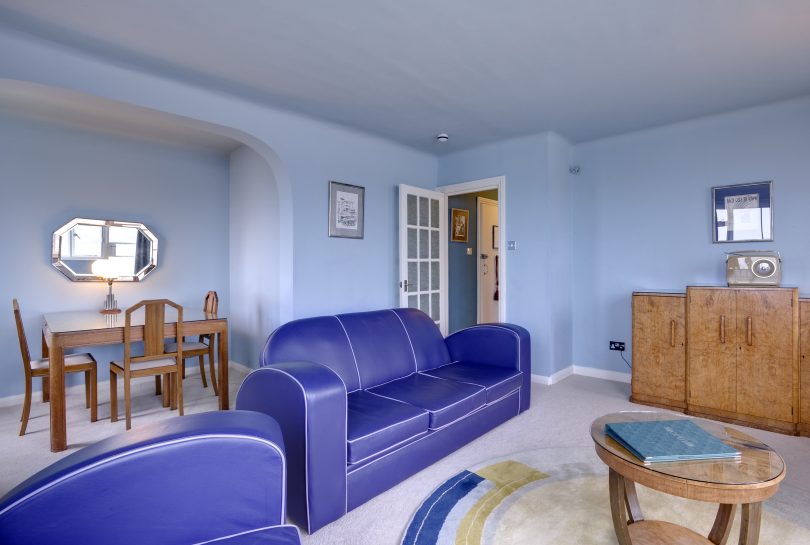
Moreover, refurbishments should be about aesthetics as much as comfort. At Burgh Island, for example, we undertook a refurbishment in 2019 to transport the hotel back to its 1930s’ glamour, which included the restoration of a 2,500-paned glass domed roof in our Art Deco Palm Court Bar to the bold geometrics influenced by Cubism and the authentic Crittal windows, the power of Art Deco is felt right across the hotel and this is truly unique to the hotel. The key takeaway is this: that historical hotels can retain their individual personalities through – and not despite – engaging in renovations.
We have entered a new age for tourism, in a post-pandemic, technology-heavy world. While some hotels embrace the growing digitalisation of our society, others offer perfect hideaways to escape this the bustle of media and technology. Whatever the nature of a hotel, a well-considered renovation offers a solid step to help a property pass into this new era of travel and, at the same time return to the splendour of its glory days.
[1]https://www.zonal.co.uk/docs/?url=https://insights.zonal.co.uk/hubfs/Go%20Tech%20Reports/Zonal%20GO%20Technology%20Report%20%E2%80%93%20What%20Guests%20Want%20From%20Hotels%20in%202023.pdf&title=Zonal%20GO%20Technology%20Report%20%E2%80%93%20What%20Guests%20Want%20From%20Hotels%20in%202023&cta=1
[2] https://partner.booking.com/en-gb/click-magazine/trends-insights/new-research-reveals-trends-driving-sustainable-travel-2023#:~:text=New%20research%20reveals%20the%20trends%20driving%20sustainable%20travel,3%20Small%20changes%20make%20a%20big%20difference%20