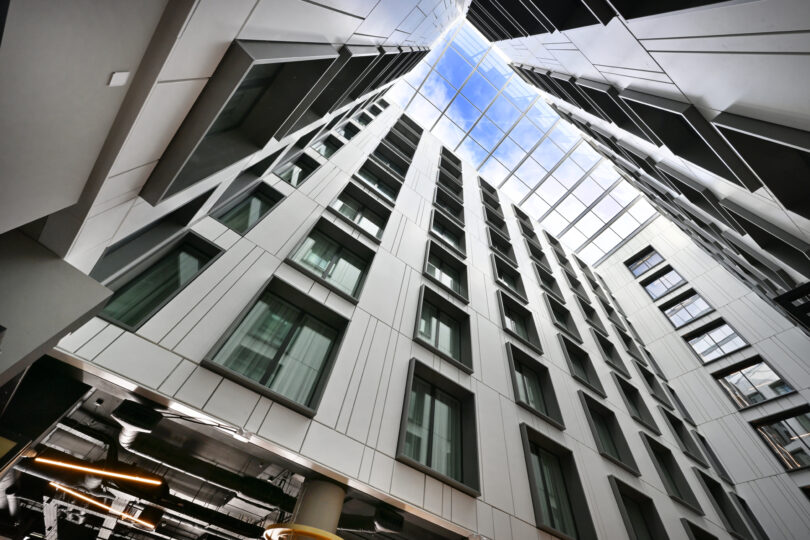

Andy Lake, Sales Director for UK and Ireland at Pyroguard, explains how architects are taking advantage of the multi-functional benefits of fire safety glass to enhance both safety and design in modern hospitality buildings.
“As building regulations become more stringent, fire safety glass must meet a wider range of performance requirements than ever before.
Fire safety glass is designed to withstand extreme heat and prevent the spread of flames, smoke and toxic gases, safeguarding people, property and possessions in the event of a fire. Typically constructed from multiple layers of toughened glass, these panes are separated by intumescent gel, a reactive material that expands when exposed to high temperatures. This forms a robust and protective barrier, helping to block smoke and flames while maintaining structural integrity.
Multi-functional benefits
Thanks to its versatility, fire safety glass can be used across a wide range of architectural elements in hospitality environments including façades, atria, spandrel panels, balustrades and interior partitions.
In modern hospitality design, there is a strong emphasis on creating safe and compliant buildings. Fire safety glass plays a crucial role in achieving this, offering certified fire protection while creating open and light-filled interiors. It is also highly versatile because additional interlayers or coatings can be added to enhance its performance, providing benefits such as improved thermal insulation and impact resistance.
Enjoying this article? Sign up for our FREE newsletter!
Laminated toughened fire safety glass can also improve acoustic performance. The number of interlayers within the glass helps to control and reduce noise transmission between spaces, creating a quieter and more comfortable environment for guests.
However, incorporating large areas of glazing also brings challenges, with solar gain being a key one. Excessive sunlight can increase indoor temperatures and put pressure on cooling systems.
To combat this, a solar control coating can be applied to one of the glass panes within the system. This coating reflects UV rays, helping to keep interiors cooler in summer. In colder months, the same glazing can help retain warmth, supporting a stable indoor climate year-round and resulting in a more energy-efficient building.
Case Study: TRIBE Hotel, Manchester
An example of a modern hotel utilising the multi-functional benefits of fire safety glass is the TRIBE Hotel, located in the heart of Airport City Manchester’s hotel district.
Given its location near a busy airport, the hotel required a glazing solution for its internal atrium that would deliver both fire protection and high acoustic performance. With guest rooms overlooking the atrium, the internal windows had to meet strict fire safety standards, providing 60 minutes of integrity and insulation, while also achieving a sound reduction of over 50dB to ensure a peaceful environment for guests.
To meet these demands, glazing specialist OWS partnered with Pyroguard’s technical team to specify a high-performance solution using Pyroguard Protect, a toughened fire safety glass that offers both robust fire resistance and excellent acoustic insulation.
The glass was installed within aluminium framing systems across 98 internal windows throughout the hotel, meeting regulatory requirements without compromising on natural light or visual appeal. This collaborative approach not only ensured compliance but also significantly enhanced guest comfort and experience.
Enhancing hospitality spaces
The multi-functionality of modern fire safety glass represents a significant advancement in architectural design and construction. By offering a combination of fire protection, acoustic performance, energy efficiency, solar control and aesthetic appeal, the latest fire safety glass can meet the demands of hotel and hospitality venues.”
For further information on the benefits of Pyroguard’s fire safety glass visit: www.pyroguard.eu