
By Sophie Levenson, Partner, Knight Frank
A shift is clearly underway. Retail and food & beverage insolvencies fell 9.8% in the year to May 2025 compared to the previous twelve months. The signs remark that the sector is stabilising, and in some corners, starting to thrive – and there may be a valid reason for this.
The outdated and overstretched are falling away making room for a new phase that’s more focused, resilient, and far more in tune with how people want to live.
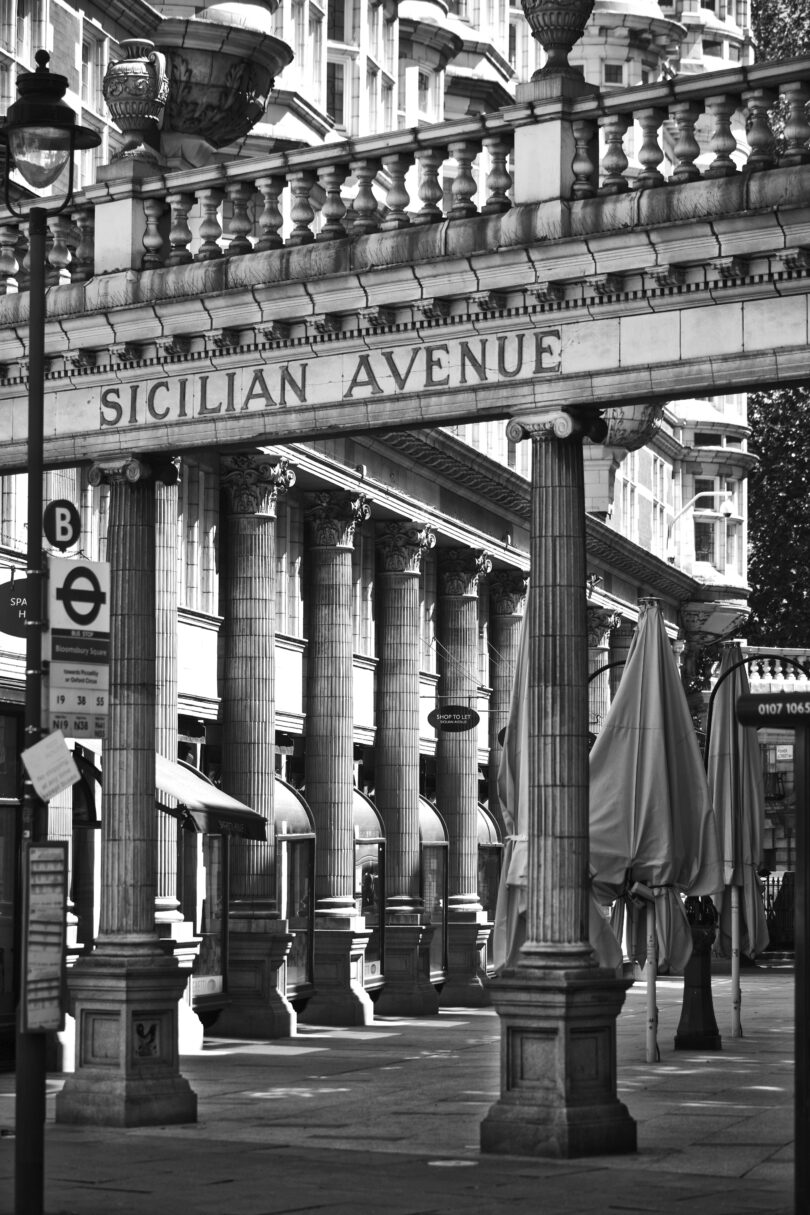
You can see this evolution in heritage places like Sicilian Avenue in Bloomsbury, London. It’s an architecturally beautiful pedestrianised street sandwiched between Holborn station and The British Museum – the UK’s number one attraction. It’s not a major retail thoroughfare, but a curated environment sympathetically restored where calm and character have replaced clutter and newbuild uniformity. Its focus is to rebuild the bridge between the local community, transient visitors and everyday Londoners using food and beverage as the connection. Sicilian Avenue perfectly showcases the impact traditional, heritage retail spaces can have on meeting consumer needs – even when they are 125 years old and Grade II listed.
Research commissioned by Tristan Capital Partners shows that 63% of people prefer dining on pedestrianised streets when visiting London. That rises to 64% among 25–34-year-olds. More importantly, the primary reason for people to visit London is for high quality dining and socialising experiences.
The demand is no longer simply for convenience, but for quality. People want an atmosphere and a slower pace, and when they find it they are loyal to it In fact, over half say they’re looking for that high quality social and dining experience in the capital compared to before 2019.
When Leisure and Business Collide in Retail
London’s working culture is part of the shift too. Nearly one in five people working for small businesses use cafés and restaurants as workspaces. Over half of business owners say they actively seek out higher quality venues for work. For some, a café is now the office. For others, it’s where creativity comes alive, new ideas are formed and connections made. The boundaries between work, community, and social life are increasingly fluid.
Enjoying this article? Sign up for our FREE newsletter!
Retail is no longer chasing scale for the sake of it. Uniform formats and mass appeal are giving way to sharper propositions and stronger identities. Knight Frank reports that retail rents rose by 2.3% across all sub-sectors in the first half of 2025, while vacancy rates are falling, now sitting at 13.7%. This points to a more strategic approach with a smarter use of space in more relevant formats. There is a greater emphasis on experience and building loyalty over transactional relationships.
Sicilian Avenue brilliantly reflects this direction where it doesn’t rely on footfall alone, instead creating an environment where people want to spend time. Its focus on pedestrianisation supports what people are searching for: a more pleasant atmosphere. Tritan Capital Partner’s report supports this notion with more than half of consumers saying that traffic-free streets feel calmer and more enjoyable. And among Baby Boomers it’s nearly three-quarters suggesting that pensioners are willing to travel to places that will serve their needs.
These shifts are already influencing investment. Prime yields on high street properties are strengthening and demand for the best-located, best-designed spaces is increasing. Retail investment totalled £2.51 billion in the first half of 2025. Whilst not a dramatic spike, it is showing a steady, sustainable growth that mirrors the sector’s new trajectory.
Consumer spending on leisure and recreation is up 4.3% year-on-year. Despite financial pressure, people are still going out – but they’re choosing carefully. They want experiences that feel considered, not commoditised.
Sicilian Avenue demonstrates how listening to the community and the shifting needs of consumers seeking high quality experiences in beautiful locations, can be the face of retail’s future – especially as 88% of UK visitors* said they would visit Sicilian Avenue as it blossoms into the social heart of the Bloomsbury Quarter.
*Research commissioned by Tristan Capital Partners