
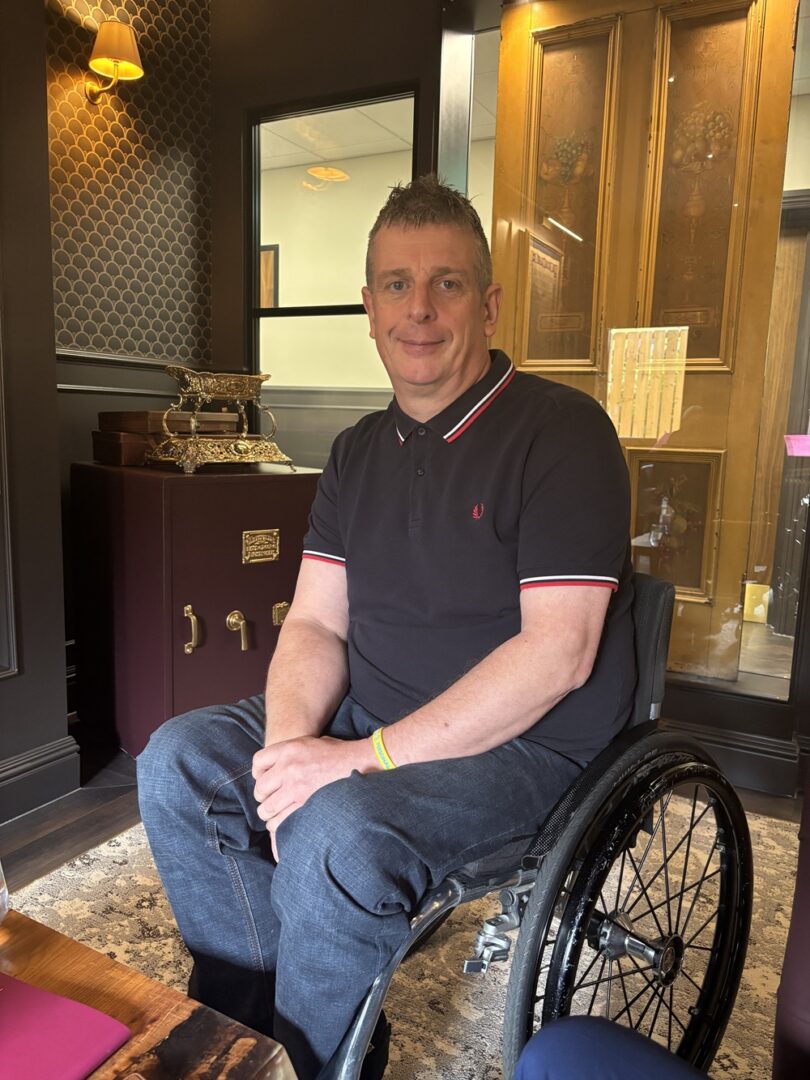

Bagnalls interviews Jason Anker MBE about the workplace accident that changed his life and how he’s striving to make the construction sector a safer place to work
On 3 January 1993, Jason Anker MBE was just 24 years old. Working as a roofing labourer on a construction site, he received word about a rush job. Could he help to fix a leaking roof in another area of the site?
Wanting to please the client, Jason agreed. After completing the job, he began to make his way back down the ladder. His supervisor, thinking Jason was back on firm ground, turned his back and walked away from the ladder. Then the ladder slipped, Jason fell, and his life was forever changed.
“I thought I was going to be okay. When I first landed on the floor, I just thought I’d banged my head. It was only when I tried to sit up that I realised I couldn’t feel my legs.
“The hospital initially told me it was good news. They couldn’t find anything wrong with me and originally diagnosed me with spinal shock, saying the numbness would go away soon. I thought I was going to be alright – bad accidents only happen to other people. Then they sent me for a CT scan.
“I knew instantly when the doctor walked into the room what he was going to say. They had found a small fracture in my spine – not even a break, just a fracture – at level T10. ‘You’ve suffered massive spinal injuries,’ he told me, then he paused for ages, like he couldn’t say the words. ‘You’ll never walk again,’ he said. Then, he just stood up and walked out of the room.”
The reality of workplace falls
As of 2025, falls from height remain the leading cause of death in UK workplaces. The construction sector has the highest rate of workplace fatalities, caused by a fall from height. 2023/24 alone saw 51 deaths, while 2024/25 saw another 35 deaths and many more severe injuries.
These are concerning statistics that Jason is only too aware of. Here, he speaks to Becky Slater, Head of SHEQ, Joanne Gualda, Director at national painting contractor Bagnalls, and Neil Ogilvie, Chief Executive of The PDA, about his life-changing spinal injuries and his vital work to improve safety, wellbeing and awareness within the construction industry.
What was it like, coming out of the hospital and trying to rebuild your life after the accident?
Jason: “Being in the rehab centre feels like a safe environment. Everything was set up for wheelchairs and recovery, but when you go home, reality hits.
“I didn’t know how to deal with the situation, neither did my friends, so they just used to take me down the pub. Drinking was almost like a part of mental health back then. My way of dealing with what had happened was to get drunk all the time. It was pretty horrific.”
Thinking about the day of the accident, what do you think were the key influences that caused the situation?
Jason: “There were many. I was young and inexperienced; I’d been out to a party the night before. My supervisor should have refused to take me into work; I was in no fit state to travel.
“I also didn’t want to speak up when I was unsure about something. I can picture the moment right before I fell, thinking, something’s not right.
“I did all the right things, the things we tell others to do – stopped, thought about it, realised it was unsafe – and I still went ahead and did it anyway. It was a rush job, so my ladder wasn’t secured properly. I just slipped, let go and that was it.
“I didn’t have any ladder training or anything like that. We talk about 1993 being so different in terms of safety and awareness, but now I’m involved in the No Falls Foundation, it’s clear that raising further awareness is still required.
“In the year of my accident, there were around 52 fatal falls from height in the workplace: that’s one a week. Last year, that figure remained at 51. After 34 years, we should have made significant improvements with all the training available and equipment being made safer to use. This is why I’m continuing to campaign for increased safety when working at height.”
If you could speak to your 24-year-old self today, what would you say?
Jason: “Tell someone what’s going on in your life. My wellbeing was bad. People were aware I was having problems, drinking too much. I’d been late quite a few times, had days off. Even if people didn’t know exactly what was happening, there were some warning signs there.
“There were frequently days when I didn’t want to get out of bed or when I didn’t go to work. I think that’s the bit that people who were involved in my accident struggle with, even today. Yes, I fell off the ladder, but with the safety recommendations as they were at the time, we weren’t actually doing anything wrong at that point. We were following common practice.
“But I shouldn’t have been on that ladder. I should have felt like I could speak to my supervisor and open up, tell him I’ve had no sleep all night, tell him I think I’ve had too much to drink. That conversation should have been first thing in the morning.
“It’s no good saying ‘I knew something wasn’t right’ or ‘They haven’t been themselves for a couple of weeks’ after the fact. We need to start speaking up as soon as we see a colleague struggling or acting differently. We need to be more proactive, not reactive. Otherwise, it’s too late.
“I sometimes think it’s even worse today than it was in 1993. At least back then there was banter, you got into a work van and people used to talk to each other because that’s all we had to do. People get in the van today and all I have to do is stick my head in my mobile phone and my supervisor will never pick up on my problem.
“This is why the F-IT workshops I run, Proud2BSafe (P2BS), are so powerful. If you ask someone ‘Are you okay?’ you get one answer: ‘I’m fine’. It doesn’t go anywhere meaningful; it’s such a closed question. But if you ask, ‘What’s your F-IT score?’, it opens up more of a conversation and opportunity to talk.”
Enjoying this article? Sign up for our FREE newsletter!
Do you see any positives that have come out of this situation?
Jason: “I’ve really turned my life around – when I look at my wellbeing journey over the last seven or eight years, I’m actually not bitter about my accident anymore. I know the person that I am today would never do what I did. I don’t think I would have even been on the site because my accident wasn’t the only time when I thought ‘this isn’t right.’
“If you’re prepared to take shortcuts, that should mean you have to go home at the end of every day and explain to your wife, husband, girlfriend, partner, exactly what shortcuts you take.
“You should have to tell your children about the shortcuts you take every day at work, and what you’re risking by taking them. My grandchildren are affected today by what I did.”
You’re a huge advocate for mental health. How important is mental wellbeing for you?
Jason: “I know now that Jason today would not do what I did on the day of my accident because I’m more aware of my personal mental wellbeing. I wouldn’t have had the accident. I would have spoken up about problems on site. I wouldn’t have been drunk the night before. I would have gone to work having had a full night’s sleep.
“I’m not saying that negative wellbeing caused my accident, but it was a major contributory reason why I chose not to speak up that day. Self-care is so vital. We all live busy lives and do things for other people every day. It’s important to actually take some time for yourself, whether that’s reading a book, listening to some music or just going for a walk.
“Sometimes people think me-time is selfish, but I always say, it’s selfless because if you practice it, you become a better person, which in turn helps the people around you.”
What’s the best piece of feedback you’ve ever had following one of your seminars?
Jason: “Someone once told one of my colleagues, ‘I think Jason has just saved my life.’ That one got me more than anything.
“I’ve also had people tell me that they have made a different choice because of my story, that they have chosen the safer option, so it really does make a difference.”
Bagnalls is a supporter of the No Falls Foundation – can you tell us about your role as an ambassador for the charity?
Jason: “I work alongside two other ambassadors – Dylan Skelhorn and Paul Blanchard – who also have first-hand experience of serious, life-changing accidents. For me, safety at work is all about wellbeing: why do people make bad choices?
“I think, fundamentally, people’s wellbeing determines what they do. If I’m in a good mood, hopefully I will challenge unsafe practices – people having a good day are more likely to speak up. But, when you’re having a bad day, you can become very blinkered – you might not even spot someone working in an unsafe way.
“That’s what the No Fall Foundation is all about: making sure people are aware of the risks and ensuring that they feel confident in challenging unsafe practices and standing up for what they believe is the right course of action.”
How can companies ensure a culture of safety?
Jason: “If you want a really great culture, I think that’s where wellbeing comes in. I always ask the question, ‘Are you safe or are you lucky?’ and most people will reply that they’re lucky. So, they’re openly admitting that they have done things that aren’t safe just to get the job done.
“But, if you create a really open and honest culture, your employees aren’t scared to report when things have gone wrong. It should be about psychological safety, as well as physical safety. Your employees should feel empowered to speak up, to prevent the same thing from happening in the future.
“A safe culture is one of the hardest things to get, but once you’ve got it, you have to maintain it. It’s all about focusing on appreciative, open and honest conversation, as well as constructive feedback. In order to progress, sometimes you need to experience small mistakes. If you really want to succeed, you have to fail: it poses an opportunity to learn.
Can you tell us a bit more about Proud2BSafe?
Jason: “Proud2BSafe is an incredible team of inspirational and motivational speakers, with experience in the areas of safety, health and wellbeing. We provide live and virtual sessions to companies worldwide that want to raise awareness of the importance of these issues.
“I initially set up Proud2bSafe in 2011, then I started working with my colleague and business partner, Tim, at Anker and Marsh in 2018. My daughter, Abbi, really expanded Proud2BSafe and made it into the organisation you see today.
“She’s got at least 10 accident speakers and is now really building up our wellbeing speakers as well. We’re aiming to be a one-stop shop for everything you need when it comes to promoting safety and organising accident-speaker events.”
What’s been your biggest achievement since working for Proud2BSafe?
Jason: “Recently, our F-IT action won the InsideOut award for Best Mental Health Initiative. We know it works in terms of safety, but to win an award in the mental health arena just blew our minds!
“We were thrilled because it’s so important to bridge the gap between safety and mental wellbeing. There are still people working in the safety arena who don’t believe that wellbeing even exists, that it doesn’t influence safety at all, which is a view we need to work together to change. So, to get this recognition was incredible!”
If you would like to get in touch with Proud2BSafe to organise an event at your company, give the team a call today on 0800 8600 185 or email Abbi on info@p2bs.org. Let’s continue the conversation about safety and wellbeing within the construction industry, together.






