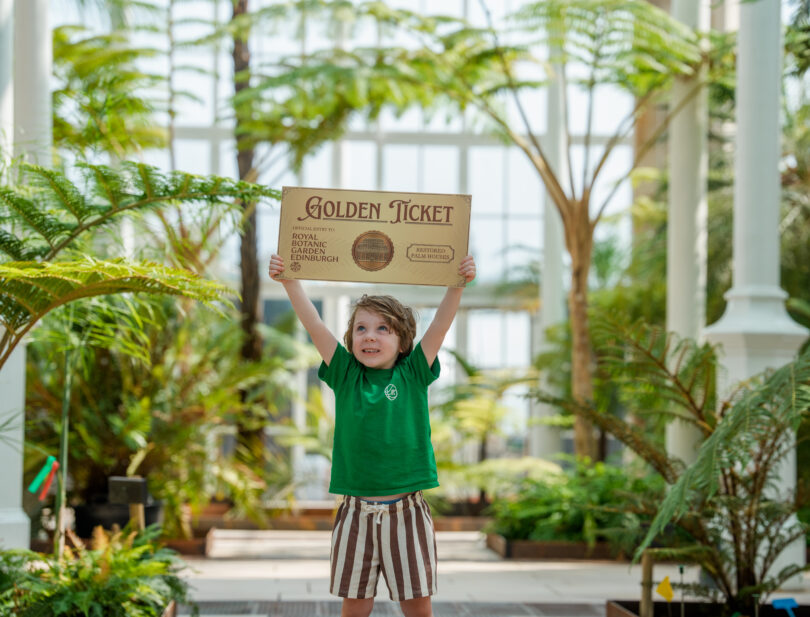

Tickets are now on sale for the highly anticipated reopening of the Royal Botanic Garden Edinburgh’s historic Palm Houses, featuring one of the tallest traditional Palm Houses in the world. The Palm Houses will reopen to the public on Friday 2 October 2026, marking the completion of the most ambitious restoration and development programme in the Garden’s 356-year history. Tickets can be booked in advance at rbge.org.uk/palm-houses.
The Palm Houses have been meticulously restored during five years of careful work, marking the completion of a transformative phase of the wider £58 million Edinburgh Biomes restoration and development programme supported by the Scottish Government, a network of generous donors including The National Lottery Heritage Fund, and a public fundraising campaign. The restoration of the original Georgian and Victorian structure has seen all 5,750 panes of glass replaced using bespoke templates, 600 m² of ironwork fully restored or replaced and 500 m² of sandstone repairs carried out, with some replacement stones weighing around a quarter of a tonne.
The newly restored Palm Houses offer an unmissable day out for visitors – from families and tourists to locals and dedicated plant enthusiasts. With nearly 600 precious plant specimens returned to their home, and a transformative new visitor experience featuring enlightening films and guided multimedia and multisensory digital tours, the Palm Houses will immerse audiences of all ages in the beauty and diversity of the world of plants.
Inspired by the Victorian passion for palms and ferns, the collection features an extraordinary range of specimens, each with a remarkable story to tell. Among the highlights is the towering stone gate palm (Trachycarpus princeps), standing over eight metres tall and believed to be the tallest of its kind in cultivation outside China – which arrived at the Garden as a tiny wild-collected seedling from the limestone cliffs of Yunnan in 1997. The striking black tree fern (Sphaeropteris medullaris), with its ink-black trunk and fronds of up to five metres long, has been planted in the centre of the oldest Palm House, in the spot where the beloved Sabal mexicana once stood.
Enjoying this article? Sign up for our FREE newsletter!
A young sabal palm, the 10-year-old offspring of the Garden’s Sabal mexicana, estimated to be around 200 years old when it was felled in 2021, has been planted, marking a poignant moment of continuity. At the new visitor entrance, the Chusan palm (Trachycarpus fortunei), one of the world’s hardiest palms, welcomes visitors in as they arrive. Among the nearly 600 specimens returned are plants endangered in the wild, reflecting the Garden’s role as Scotland’s global centre of excellence in plant science, horticulture and conservation
Professor Julia Knights, Regius Keeper of the Royal Botanic Garden Edinburgh, said: “At the Royal Botanic Garden Edinburgh we are thrilled to be re-opening the world’s tallest traditional Palm House to visitors following five years of painstaking restoration, made possible with generous support from the Scottish Government and our donors.
“The reopening of our iconic Palm Houses marks a landmark moment for the Botanics and a proud moment for Scotland. We can’t wait to invite our visitors to immerse themselves in the beauty and diversity of our palms and ferns and share amazing stories with them around the global conservation science our teams are doing to protect many of those species endangered or extinct in the wild due to habitat loss and climate change.”
Entry to the Palm Houses will be by ticketed admission, with allocated time slots available throughout the day. To avoid disappointment, RBGE recommends pre-booking in advance.
Tickets will be available from Friday 2 October. For more information and to book your tickets please go to the RBGE website at rbge.org.uk/palm-houses. Members and Patrons of the Royal Botanic Garden Edinburgh go free and will benefit from special preview access in September 2026, ahead of the public opening.