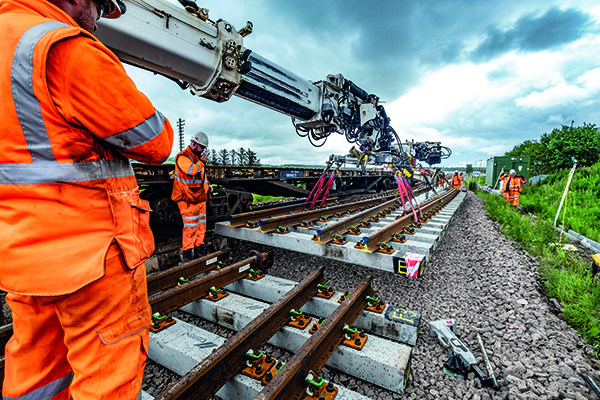

Rail Improvements in Scotland
Following significant investment over the last number of years, Scotland’s Railways enjoyed one of the best periods of performance during autumn for more than eight years.
Despite the challenges of the autumn weather, including heavy rain and strong winds affecting the network, figures released in November 2020 highlighted that 89.3 per cent of trains met the rail industry standard public performance measure (PPM) in the period (18 October to 14 November).
Continuing the recent trend of strong performance across the country, the PPM has improved by almost five per cent year on year, and this is the third best October-November performance since 2012/13. As a result of these sustained levels of punctuality, ScotRail’s Moving Annual Average (MAA) has increased to 90.7%, the highest figure for almost two years.
David Simpson, ScotRail Operations Director, said:
“These latest figures show the hard work of everyone across Scotland’s Railway to maintain the high level of performance, helping to deliver a vital service for key workers during the pandemic.
“There’s been a lot for the public and the rail network to contend with over the last few months. The challenge of the coronavirus and very heavy rainfall and storms in October and November have all made it difficult to keep our customers moving.
“But we have again delivered for our customers and we look forward to continue providing them with a critical service in the coming weeks and months.”
Teams of engineers across Scotland’s Railway have worked around the clock to prepare trains and tracks for autumn and winter weather. One of their biggest challenges was keeping tracks clear of leaves and debris to ensure customers keep moving.
Millions of pounds were invested in rail-head treatment trains which clean tracks and coat them with a special adhesive to help trains keep their grip and stop more quickly. Leaf-busters clear debris directly from the rails and ScotRail trains’ wheels are cleaned at depots.
Scotland’s Railway is ready to deploy its £1 million ‘Winter Train’ which has specialist heat-lances and hot air blowers to melt snow and ice. A fleet of 10 snow ploughs is also standing by supported by a helicopter unit which uses thermal imaging to identify spots where severe weather could take hold.
Over the last few years a number of rail improvement projects have taken place across Scotland. Work to improve stations, complete line electrification and upgrade railway infrastructure have all been completed to provide travellers with a more efficient service and way of travelling.
The Edinburgh Glasgow Improvement Programme, more commonly known as EGIP, for example, is a comprehensive package of improvements to Scotland’s railway infrastructure. The £650 million scheme is a Scottish Government priority being delivered by Network Rail in a bid to modernise and upgrade key junctions and infrastructure, as well as widespread electrification of the Scottish rail network, including the main line between Edinburgh and Glasgow.
The key elements of the project include widespread line electrification, a redevelopment of Queen Street station, platform lengthening in various locations and Edinburgh Waverley station improvements. Other aspects of the project include general signalling improvements, junction upgrades, the creation of a new electric Millerhill Depot, the new Edinburgh Gateway station and Haymarket station redevelopment.
The Aberdeen-Inverness Improvement Project is being delivered in phases and will provide incremental benefits throughout the life of the scheme. The Aberdeen-Inverness Improvement project is a Scottish Government funded project to upgrade the railway infrastructure between Aberdeen and Inverness.
Phase one of the scheme aimed to deliver enhanced commuter services into each city and to facilitate the capacity for new stations at Kintore and Inverness Airport. Future phases of the project will help support an hourly service between Aberdeen and Inverness, with an average journey time of around two hours. The exact scope and timing of works to achieve this is still to be determined. The whole project is scheduled to be delivered by 2030.
Alter Supplies & Contracting
Alter Supplies & Contracting specialise in the supply and installation of every aspect of fencing, from high end security to agricultural. We also have a dedicated team to carry out soft landscaping on large scale planting schemes.
We have been operating throughout Scotland for 30 years. We take pride in being at the forefront of innovative fencing technologies in order to supply jobs as quickly as possible to meet crucial deadlines and supply cost effective fencing solutions through valued engineering.
As rail improvements take place across Scotland, we have been subcontracted by numerous main contractors, completing lineside fencing for electrifications upgrades to be completed. We have also carried out finishing work at various rail stations across Scotland, erecting back of platform fencing.
Being involved in such projects has given Alter the opportunity to be part of crucial infrastructure work to ensure Scotland’s rail network is one of the highest performing with in the UK, which in turn has giving us the chance to show why we are a one of the leading companies within the fencing industry.
We are the fencing experts! To find out more, please visit www.altersupplies.co.uk.