
Tampere Tramway
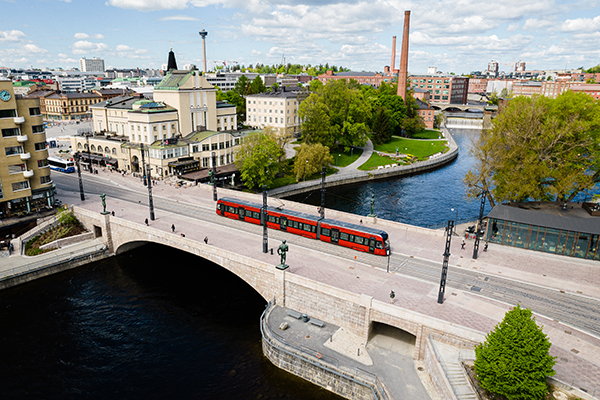
The decision to build Tampere Tramway was made in November 2016 and after a construction and commissioning phase of nearly four years, traffic on Tampere Tramway began 9 August 2021. The project has caused a massive change in Tampere’s cityscape and the regional public transport system: the modern Tramway now glides through a completely renovated main street built for convenience, public transport, and smooth light traffic. Tramway construction is more than just a transport infrastructure project – it’s a major investment in urban development that has already increased the attractiveness and appeal of Finland’s second largest urban area.
The tramway is also an investment in a cleaner and easier everyday life. The tram cars will operate on green electricity, and each one can carry the same number of passengers as three buses. This will reduce the amount of traffic, improve air quality, and make the city centre more pleasant.
“Above all, the tramway is being built to make everyday life easier for Tampere residents and other people moving around here, regardless of whether they are going to work, running errands or simply visiting the city. The tramway is part of a major change in Tampere, the goal of which is to reduce climate change and increase the use of sustainable modes of transport. Other actions in addition to the tramway include developing local train traffic, city bikes, a one-hour train connection to the capital region and ensuring smooth car traffic. Tampere and its city centre have to be accessible with all modes of transport now and in the future,” states Lauri Lyly, Mayor of Tampere.
The first tram car moved in Tampere in March 2020, when test runs began in Hervanta with a test car imported from Germany. The very first Tampere tram car arrived in the city in May of the same year, and Tampere residents were able to watch its first test runs in July.
The construction and commissioning phase has lasted for nearly four years and all the parties involved have learned an amazing amount during that time. Well-organised planning and testing play a key role in commissioning a completely new tramway system. In addition to the extensive construction project, Tampere Tramway’s test runs were a major effort for tramway builders because the new cars, track and drivers were all being tested at the same time.
The Tramway Alliance designers and builders have done more than 2.2 million hours of work during section 1. This means over 1,400 person-years. The Tramway Alliance signed subcontracting agreements worth over 10,000 euros with more than 300 different companies. In terms of euros, more than half of the subcontracting went to companies in Pirkanmaa.
The tramway will have about 130 employees, with 75 of these working as traffic controllers and tram car drivers. Their employer is VR, which is responsible for traffic on Tampere Tramway, and handling the recruitment and training of these employees.
The Tampere region is well on its way to having Europe’s most modern public transport system. Construction work on section 2 of the tramway is in progress and regional expansion of the system is moving ahead. Tramway construction has spurred a renewal of the entire public transport route system, and regional residents now have more opportunities to use public transport.
“The tramway was implemented in Tampere as an urban development project with close links to land use development. The tramway example demonstrates how strong growth in the urban area can guide the development of tramway and bus and train traffic in the future. We have everything needed to implement a versatile public transport system, and the future looks good in this region,” states Mika Periviita, Director of Public Transport at Nysse.
“We gained a lot of good experience from implementing section 1, which we can utilise when planning and building section 2 and any possible future tramway lines. Among other things, the technical tramway solutions have been developed during the time. The operating methods, communications and cooperation with stakeholders has been refined into a smooth process,” said Ville-Mikael Tuominen, Project Director in the City of Tampere’s Tramway Development Programme.