
Dawlish Sea Wall and Station
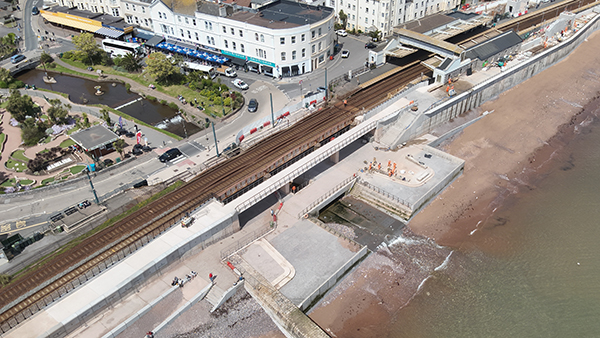
The second stage of the Dawlish Sea Wall has been completed, stretching 415 metres between Coastguards and Colonnade breakwaters to protect the promenade and railway from extreme weather and turbulent tides. The £80 million Government-funded project has seen progress continue from the 360-metre wall built along Marine Parade in 2020, and its conclusion means the surrounding beaches have now reopened to the public.
A total of 164 front panels, 203 pre-cast blocks, and 189 recurve units have been fitted to ensure the 8-metre-tall sea wall is sturdy and capable of redirecting the incoming waves back out to sea. This second stage of the wall specifically stands guard of Dawlish station, protecting the coastal stretch of railway to minimise delays and prevent closures. Although the wall itself has been completed, additional work continues to construct a footbridge and lifts to improve passenger accessibility to the station. Focus has also now turned towards improving the promenade itself with the installation of new seating areas, ramped access to the beach, and a new stilling basin – which allows Dawlish Water to run into the sea.
Construction of the sea wall saw the use of an eight-legged, self-contained jack-up barge – called a ‘Wavewalker’ – which allowed the team fitting the wall to work in high tidal zones which are a particular threat to the South Devon coastline. This was the first time one of these barges has been used on a UK rail network site.
While built with the very best 21st century materials and construction practices, Dawlish Sea Wall is not without its elements which point towards the town’s past. The promenade features the footprint of the old Coastguard’s boathouse, and the wall in front of Dawlish station shows outlines of the alcoves where public seating was previously situated. The old sea wall has also been incorporated into the project, its stone having been reclaimed and turned into benches.
Protecting the railway, promenade and station platforms from the forceful winds and spray of the sea has been the project’s primary motivator, but the wall’s construction will bring a range of additional benefits to the area too. The removal of pigeon roosts means the promenade will remain clean for public use, passengers with disabilities or pushchairs will find the dry, protected promenade easier to navigate, and the station’s longevity will benefit on account of the wall protecting its listed structure from wind and water damage. When poor weather does cause delays to rail services, the wall will reduce the risk of complete closures and improve recovery time. Looking ahead to the future, the wall means the promenade will erode at a much slower rate than before, ensuring future generations will be able to enjoy it for years to come.
Dawlish Sea Wall has been developed as part of the South West Rail Resilience Programme, a scheme put into place after a damaging storm in 2014 called attention to the need to protect coastal railway links between Exeter and Newton Abbot. Its construction followed years of investigative study alongside collaborative work between world-leading marine, coastal and railway engineering experts. This preliminary work also included considerations of how the project might impact the local environment and wildlife habitats, and what steps could be taken to keep this to a minimum. It is estimated that the wall’s construction has boosted the area’s economy by £15 million thanks to Network Rail’s commitment to utilising local workers, materials, and accommodation throughout the project’s duration.