
Barmouth Viaduct Restoration
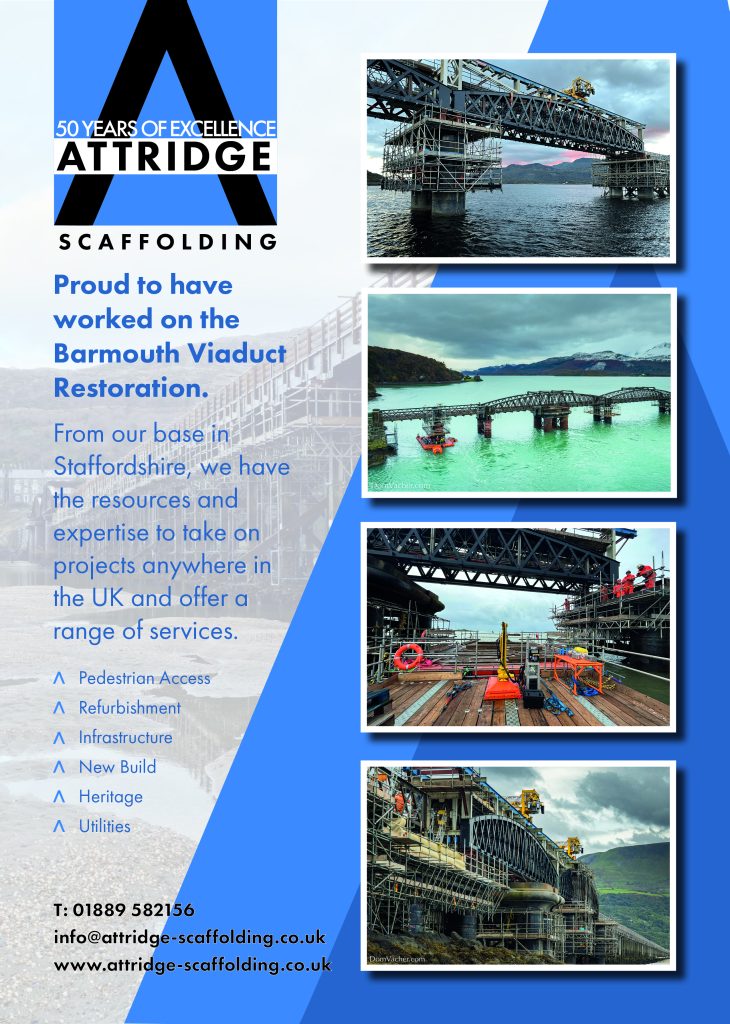
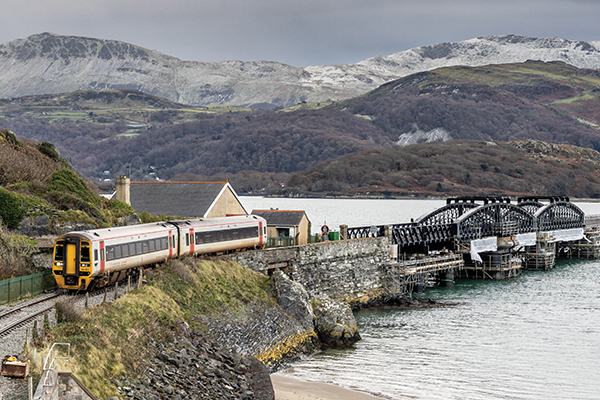
December 2023 saw the reopening of Barmouth Viaduct following a three-year restoration process. The single-track timber railway viaduct – 154 years old and 820 metres long – is the oldest and longest of its kind in the UK, and restoration works to reinforce its structural integrity for generations to come had been underway since 2020.
The final stage of Barmouth Viaduct’s restoration, completed over a 13-week period, saw many of the viaduct’s metallic elements replaced and restored in addition to the refitting of 130 metres of track along its northern side near Barmouth Toll House. Following a successful test lift, this concluding phase of work involved the fitting of two new 160-tonne metallic spans in replacement of the existing pair, each requiring transportation via rail trailers before being lifted onto the viaduct. The existing spans were deconstructed – their components placed onto a pontoon set up in Mawddach Estuary – while their replacements were adjusted to ensure their size and shape was exactly right.
The test lift preceding this stage of the project was key to its success, with 16 jacks and six rail trailers being used. A mock railway was built and practiced with outside of Barmouth, and 15 people worked the cantilever and jack system to lift the span. Prior to this final stage being completed, Nick Millington, Route Director for Network Rail Wales & Borders, said: “A huge part of this phase of work has been planning the replacement of the 160-tonne metal spans, a feat of engineering that has involved months of preparation to develop a unique delivery and installation system. We have also worked closely with our partners at Natural Resources Wales to ensure we’re doing everything we can to protect the delicate ecology of the Mawddach Estuary.”
Commenced in 2020, the restoration of Barmouth Viaduct was completed across several phases to minimise disruption for local communities and commuters. Costing £30million, the project was organised with the objective of replacing its timber and metallic elements, renewing its longevity for a further 60 years. The earlier stages of the project saw Alun Griffiths attend to the timber components of the bridge and replace those that had decayed. Prior to its final stage of renovation taking place, the project saw the replacement of all of the viaduct’s timber main beams and 820-metres of track.
The Grade II*-listed viaduct holds a special status in the UK. It has persevered through years of wear and tear – avoiding a close call with a live naval mine in 1946 and a woodworm invasion in the 1980s – but was deemed in need of serious care and attention. In its biggest ever renovation, the viaduct has had over 1,000 of its timber and metal elements replaced.
Network Rail worked closely with Transport for Wales, Cadw, Gwynedd County Council, and local representatives throughout the project to upgrade the bridge in the way least disruptive to those who use the railway line and live in the local area.