
Barmouth Viaduct
The completion of the £30m restoration of the iconic Barmouth Viaduct in North Wales has been shortlisted in the Constructing Excellence in Wales awards for Infrastructure Project of the Year and has been shortlisted for three RICS awards in the categories of Wales Community Benefit, Wales Heritage, and Wales Refurbishment Revitalisation.
The restoration was completed in December 2023 after a painstaking four-year programme of work to carefully restore the 156-year-old, Grade II* listed structure, back to its former glory and protect it for generations to come.
Network Rail’s route director for Wales and Borders Nick Millington said: “It’s a fantastic achievement for the teams who have worked tirelessly in all weathers to complete the job, which will enable the viaduct to safely carry rail services for many years to come. We hope it will encourage more people to travel by train to see this beautiful part of Wales, supporting the local economy and our aim of decarbonisation.”
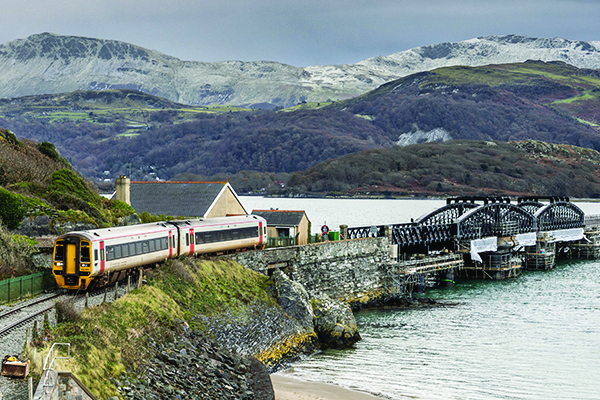
Originally constructed by the Aberystwyth and Welsh Coast Railway in 1867, the Grade II* listed 770m structure is the longest viaduct in Wales and the longest wooden railway bridge in Britain.
When restoration began in 2020, Network Rail engineers found the 156-year-old bridge to be in a much worse condition than originally anticipated, as many of the timber elements had decayed significantly and a large portion of the metallic elements had corroded. The programme was therefore planned to make sure it wouldn’t threaten the structure’s industrial heritage, with components replaced on a ‘like for like’ basis to retain its majestic appearance. Realising the impact that a long-term closure of the line would have on the community, the work was purposely spread over several years with four shorter closures.
Once work was underway, after strengthening the north abutments and upgrading additional timber elements, Network Rail focused on the metallic structure, successfully completing the intricate task of moving two 160-tonne spans. With one newly fabricated span weighing the same as a blue whale, teams used a total of 44 jacks – ranging from 20 to 100 tonnes capacity – as well as six rail trailers to carry out the technical move.
Griffiths Rail Director Tim James said: “Griffiths is proud to have completed the reconstruction of the new bridge in a safe, sustainable, and timely manner. We used innovative construction techniques to slide the new bridge into place and at the same time demolish the old structure. We worked tirelessly with our supply chain partners to design and build a new bridge that is fit for the future.”
Work was also undertaken to renew 297m of track near the toll house on the northern side and replace 1,100m3 of ballast (track stone) to ensure the safety of services crossing the viaduct over the Afon Mawddach.
The viaduct is now fully operational, and members of the public can once again walk across it to enjoy the breathtakingly beautiful views of the surrounding countryside and coastline.
Mayor of Barmouth Councillor Owain Pritchard said: “To many people, Barmouth Viaduct is an iconic landmark in a stunning setting. To the people of Barmouth and Meirionnydd it is also a vital link between communities, taking children to school, people to work, shops and the doctors. We are grateful to all the people who have worked on this huge project.”
Wales Office minister Fay Jones said: “The Barmouth Viaduct is an iconic part of Wales’ railway heritage, and I am delighted that the UK Government has made this £30m investment in its restoration. Together with the planned £1bn electrification of the North Wales Main Line, £50m for Cardiff cross rail and other investments from the South Wales Valleys to Aberystwyth, the UK Government is delivering improvements in rail infrastructure and improving journeys for passengers in every part of Wales.”
Transport for Wales Customer Experience Director Jo Foxall said: “The huge investment by our partners in Network Rail on Barmouth Viaduct will help secure the safe operation of the rail network for years to come. And with brand new trains set to enter service in around 12 months’ time, it really is an exciting time for the line.
“We would like to thank our customers and the communities affected for their patience while this vital work took place. The investment really is worth it for the long-term future of the line.”