
Huddersfield Station Upgrades
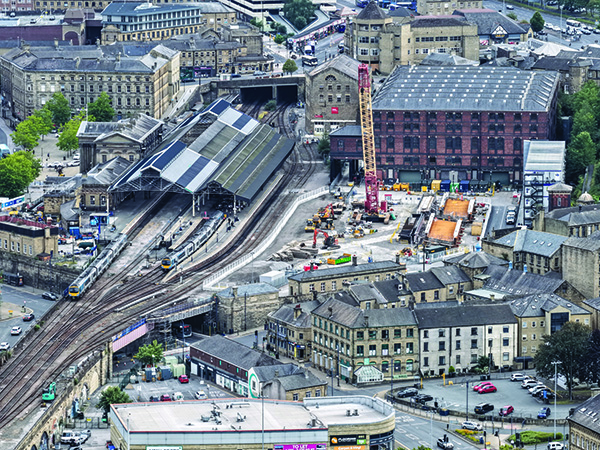
Huddersfield Station has undergone major changes after closing for 30 days, marking phase one of the stations intended upgrades complete.
The first train pulled up to the newly rebuilt platforms in Huddersfield Station on the 29th of September after TRU West Alliance have worked around the clock for over a month, transforming the station to provide faster, more reliable journeys for customers and help support local economic growth by connecting Huddersfield more efficiently with Manchester, Leeds and beyond.
James Richardson, Managing Director for TRU said: “Seeing the first train pull into the new platform was a proud moment for everyone involved. People can see from today how this transformation is a key step forward in delivering a modern, future-ready station for Huddersfield.”
BAM’s Project Director on Transpennine Route Upgrade Chris Usher, commented: “The 30-day Huddersfield blockade was a great example of what BAM does best, delivering complex, multi-disciplinary civil engineering safely, efficiently and to plan.
“The programme brought together every part of our business, from bridge reconstruction and drainage installation to structural works and temporary works, all completed within an extremely tight timeframe. I’m incredibly proud of what our teams achieved; it reflects the technical expertise, planning precision and commitment that underpin everything we deliver. The works delivered during the blockade redefine what’s possible in the rail industry, unprecedented in terms of scale, volume, and complexity.”
The Huddersfield station story begins in 1839, when the Manchester and Leeds railway finally breached a formidable geographical barrier: the Pennines. After years of local campaigners rallying around the need for the line to branch out to Huddersfield, an 1845 Act of Parliament put the wheels in motion before prolific Yorkshire architect, James Pigott Pritchett’s vision came to life in an official part-opening of the station, in 1847.
By 1850, the iconic station façade was complete after a local jeweller supplied the clock that keeps time over the historic St. George’s Square. The same frontage survives to this day, serving as an impressive backdrop for large gatherings in the square, going as far back as 1853.
In 1878 the station needed upgrading to meet the ever-changing demands of growing capacity, thus an island platform was built to accommodate the additional tracks required. After a tragic collapse during construction in 1885, the roof had to be reconstructed a year later using wrought iron to create a more expansive structure with a width of 77 feet, which became known as, the Euston-style roof. Even today, that same roof remains an engineering marvel and a symbol of industrial innovation.
Today, TRU have ensured that the efforts of those Victorian engineers are preserved through the sympathetic restoration of the station roof. Some of the other improvements TRU made were the construction of 658 metres of drainage, the installation of four bridges, the laying of 2,390 metres of new track, all whist carrying out over 3,000 trains via diversionary routes and running 13,500 rail replacement bus services to keep customers moving.
Richardson added: “As phase two of the works continues, partially out of public view until early 2027, all of us on TRU are proud of the difference we are making across the enterprise, taking the railway well into the future for years to come.”
Balancing the need to preserve such important pillars of heritage at the station whilst bringing it up to modern standards is essential for TRU. A Grade II listed tearoom, built during the 1886 station upgrade has been carefully dismantled in 8,000 individual pieces which are being stored off-site before reinstatement on the newly remodelled platform in all its former glory.
Chris Nutton, Major Projects & TRU Director at Trans Pennine Express said: “The end of the 30-day closure was a major milestone in the history of our iconic station, and I couldn’t be prouder of how we came together as an industry to deliver it. From track engineers to train crew, and from train planning to rail replacement bus coordinators, everyone played a vital role.”
By 2027, Huddersfield station will be transformed and serve as a vital hub for a new era of rail travel across the Pennines, but stones laid in the 1840s will remain, and ideas drawn up in the 1880s will still be etched into the station’s identity.